

Table of Content
- Google My Business: Your Free Marketing Foundation
- Social Media Marketing (Without Wasting Time)
- Influencer Marketing (The Right Way)
- Smart Coupon and Promotion Strategies
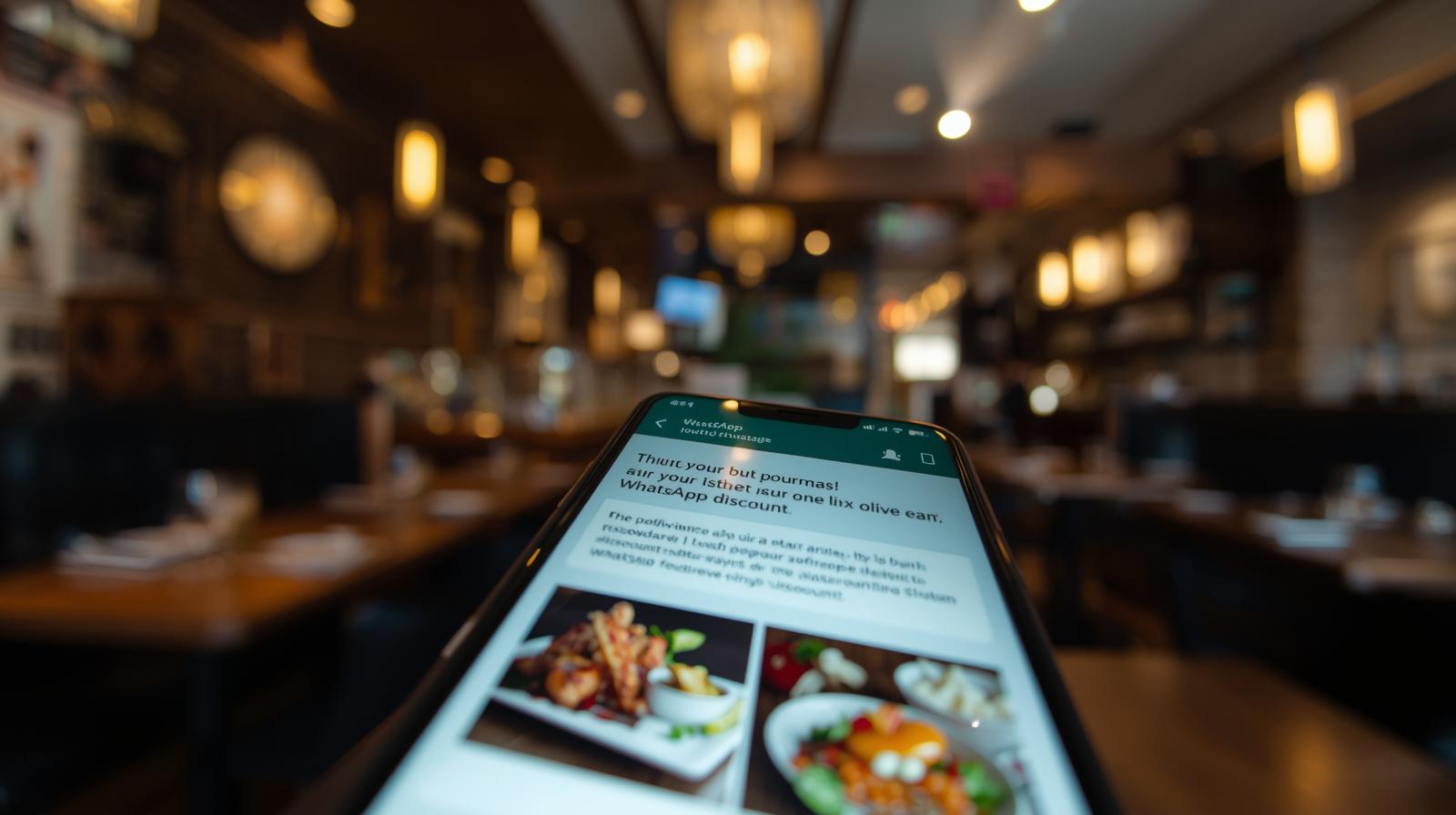
- WhatsApp Marketing: The Underrated Channel
- Customer Reviews: Your Reputation Engine
- Email Marketing: The Forgotten Money Maker
- Content Marketing for Long-Term Growth
- Loyalty Programs That Drive Repeat Business
- Local SEO: Dominate “Near Me” Searches
- How Digital Menus Supercharge Your Marketing
- Measuring What Matters
Restaurant Marketing Strategies That Actually Work in 2026
The restaurant business is brutal. Over 660,000 restaurants compete for customers in India, and 60% fail within three years. The difference between thriving and closing? Smart marketing.
Good news: You don’t need a massive budget. You need the right tactics executed consistently. This guide covers proven strategies that fill tables, not just social media feeds.
The Reality: Traditional Marketing is Dead
Newspaper ads, flyers, and billboards are expensive and unmeasurable. Modern diners discover restaurants through Google searches, Instagram scrolls, online reviews, and WhatsApp recommendations.
The numbers don’t lie: 87% of customers research restaurants online before visiting. If your marketing isn’t digital-first, you’re invisible.
1. Google My Business: Your Free Marketing Foundation
76% of people who search for a restaurant on their phone visit within 24 hours. Yet most restaurants have incomplete profiles.
What you must do:
- Complete every section: hours, phone number, menu, attributes
- Upload 10+ high-quality food photos
- Post weekly updates about specials and events
- Respond to every review within 24 hours
- Add specific categories beyond just “restaurant”
Impact: Complete GMB profiles get 7x more clicks than incomplete ones.
2. Social Media Marketing (Without Wasting Time)
Focus on Instagram and Facebook where your customers actually are.
What to post:
- High-quality food photos with natural lighting
- Behind-the-scenes kitchen content
- Customer experiences and testimonials
- Daily specials and new menu items
- Short cooking videos and reels
Posting frequency:
- Instagram: 4-5 posts per week plus daily stories
- Facebook: 3-4 posts per week
- Best times: 11 AM-1 PM (lunch) and 6 PM-8 PM (dinner)
Critical rule: Respond to every comment and DM within 2 hours. Social platforms reward engagement with more reach.
3. Influencer Marketing (The Right Way)
Celebrity influencers are expensive and ineffective. Micro-influencers deliver real results.
Who to target:
- 5,000-50,000 followers (higher engagement rates)
- Local food bloggers who actually review places
- Real food enthusiasts, not just “influencers”
How to approach:
- DM directly: “We’d love to host you to try our new menu”
- Offer complimentary meal for 2-3 people
- Don’t demand posts – let them share organically
- Good experience equals authentic content equals real customers
Cost reality: Spending 2,000-3,000 rupees on a micro-influencer meal often brings better ROI than 20,000 rupees on a celebrity post.
Red flag: Avoid influencers demanding payment before visiting. Real food lovers want good food, not just money.
4. Smart Coupon and Promotion Strategies
Discounts work when done strategically. Random discounting destroys your margins and brand.
Effective promotion types:
First-time customer offers: “10% off your first order” builds your customer database. Collect phone numbers during ordering to send future promotions.
Time-based promotions: Happy hour pricing (3 PM-6 PM) fills slow periods. Monday discounts boost the slowest day. Weekend brunch specials create new revenue streams.
Minimum order incentives: “Free dessert on orders above 500 rupees” increases average order value without blanket discounting.
Festival and event specials: Diwali menus, Valentine’s packages, birthday month discounts create urgency and relevance.
What to avoid: Never do “50% off everything always.” It devalues your brand and attracts price-sensitive customers who disappear at full price.
5. WhatsApp Marketing: The Underrated Channel
WhatsApp has 487 million users in India. Your customers are already there, and message open rates exceed 90%.
Building your database: Collect phone numbers automatically when customers order through your digital menu system. Offer small incentives: “Share your number for exclusive offers.”
What to send:
- Birthday wishes with special discounts
- “We miss you” messages to inactive customers
- New menu launch announcements
- Flash sales during slow hours
- Weekend special previews
WhatsApp Status: Post daily specials, limited-time offers, and behind-the-scenes content. It’s free advertising to your entire customer base.
Frequency rule: Maximum 2-3 messages per week. More than that feels spammy, and customers block you.
6. Customer Reviews: Your Reputation Engine
94% of diners read reviews before choosing a restaurant. Reviews aren’t optional anymore.
Getting more positive reviews:
Ask at the perfect moment – right after customer compliments the food or at the end of a great meal. Make it easy with a direct Google review link sent via WhatsApp the next day.
Create QR codes on bills: “Loved your meal? Scan to review us.”
Managing negative reviews:
Respond within 24 hours. Acknowledge the issue, apologize genuinely, offer to make it right. Never argue publicly.
Example response: “Thank you for your feedback. We’re sorry your experience didn’t meet expectations. Please call us at [number] so we can personally address this.”
Truth: How you handle negative reviews matters more than the review itself. Future customers watch how you respond.
7. Email Marketing: The Forgotten Money Maker
Email marketing returns 42 rupees for every 1 rupee spent. Yet most restaurants ignore it completely.
Building your list:
- Collect emails during online orders
- WiFi login portal exchange
- “Subscribe for 10% off” on your website
- Birthday club sign-ups
What to send:
- Weekly specials and new menu items
- Exclusive subscriber-only offers
- Automated birthday emails with discounts
- Re-engagement campaigns for inactive customers
Best practices: Send Tuesday-Thursday between 10 AM-2 PM for highest open rates. Keep emails mobile-friendly since 70% open on phones.
8. Content Marketing for Long-Term Growth
Quality content builds authority and drives free organic traffic from search engines.
Blog topics that work:
- “Best [Your Cuisine] in [Your City]”
- “Behind Our Signature [Dish Name]”
- “[Festival] Special Menu Guide”
- “How We Source Our Ingredients”
Video content: Instagram Reels and YouTube Shorts get 2.5x more engagement than photos. Create 15-30 second clips showing recipe reveals, chef secrets, customer reactions, and kitchen time-lapses.
Equipment needed: Just your smartphone. Authenticity beats production quality.
9. Loyalty Programs That Drive Repeat Business
Acquiring new customers costs 5x more than keeping existing ones. Loyalty programs maximize customer lifetime value.
Simple programs that work:
Digital punch card: “Buy 5 meals, get 6th free” tracked automatically via phone number. No physical cards to lose.
Points system: 100 rupees spent equals 10 points. 100 points equals 100 rupees off next order.
VIP tiers:
- Silver (5,000 spent): 5% off always
- Gold (10,000 spent): 10% off plus priority seating
- Platinum (25,000 spent): 15% off plus exclusive events
Referral rewards: “Refer a friend, both get 20% off” turns customers into brand ambassadors.
10. Local SEO: Dominate “Near Me” Searches
“Restaurant near me” gets 120,000+ monthly searches in India. Local SEO puts you in those results.
Essential steps:
- Optimize Google My Business completely
- Keep Name, Address, Phone consistent across all platforms
- List on Zomato, Swiggy, JustDial, TripAdvisor
- Create location-specific content
- Encourage customers to mention your area in reviews
Pro tip: “Best biryani in Koramangala” in reviews helps you rank for local searches.
How Digital Menus Supercharge Your Marketing
Modern restaurant technology isn’t just operational – it’s a marketing engine.
Automatic data collection: Every order through a digital menu captures the customer’s phone number. No manual entry, no lost data. Within months, you build a database of hundreds of real customers.
Instant promotions: Update offers in real-time without reprinting anything. Launch flash sales during slow hours. Create event-specific menus for festivals. Change pricing for happy hour automatically.
Easy sharing: Customers share your menu link on social media and WhatsApp. Each share is free advertising. QR codes bridge offline marketing to online orders.
Customer behavior insights: Track favorite dishes, order frequency, and peak times. Use this data to personalize offers and optimize your menu.
Real example: A Mumbai cafe collected 500 phone numbers in two months through their digital ordering system. One WhatsApp broadcast about a “Monsoon Special” brought 47 orders in three hours – 18,000 rupees revenue from one free message.
Measuring What Matters
Marketing without measurement is gambling. Track these critical metrics:
Customer metrics:
- Cost per new customer (marketing spend divided by new customers)
- Customer source: “How did you hear about us?”
- Repeat customer percentage
Engagement metrics:
- Social media reach and engagement rates
- Email open rates (target 20%+) and click rates (2%+)
- Website traffic and bounce rate
Revenue metrics:
- Average order value
- Customer lifetime value
- Revenue per marketing channel
Rule of thumb: If a marketing channel doesn’t return at least 3 rupees for every 1 rupee spent within three months, stop or change your approach.
Your 90-Day Marketing Action Plan
Month 1: Foundation
- Optimize Google My Business completely
- Take professional food photos
- Set up social media business accounts
- Implement digital ordering to collect customer data
- Post 3x per week consistently
Month 2: Growth
- Reach out to 5 local micro-influencers
- Launch first WhatsApp promotion campaign
- Start collecting emails and send first newsletter
- Test small Facebook/Instagram ads (2,000-3,000 rupees)
- Respond to all reviews daily
Month 3: Optimization
- Analyze which channels drive actual orders
- Double down on what works
- Cut what doesn’t deliver ROI
- Implement loyalty program
- Create content marketing plan
Common Mistakes That Kill Results
Inconsistency: Posting daily for a week then disappearing for a month destroys momentum.
All promotion, no value: Every post saying “Buy now” turns followers away.
Ignoring data: Not tracking what works wastes money on ineffective tactics.
Over-discounting: Training customers to never pay full price destroys margins.
Poor photo quality: Blurry, badly lit food photos hurt more than they help.
Not responding to reviews: Shows customers you don’t care about their experience.
The Bottom Line
Restaurant marketing in 2026 isn’t about the biggest budget. It’s about consistency, authenticity, and meeting customers where they already spend time online.
Start with your foundation – Google My Business, social media presence, and customer database. Execute two or three strategies exceptionally well rather than ten poorly. Measure everything ruthlessly.
The restaurants winning today aren’t necessarily the ones with the best food. They’re the ones customers can easily find, remember, and recommend. Make sure yours is one of them.
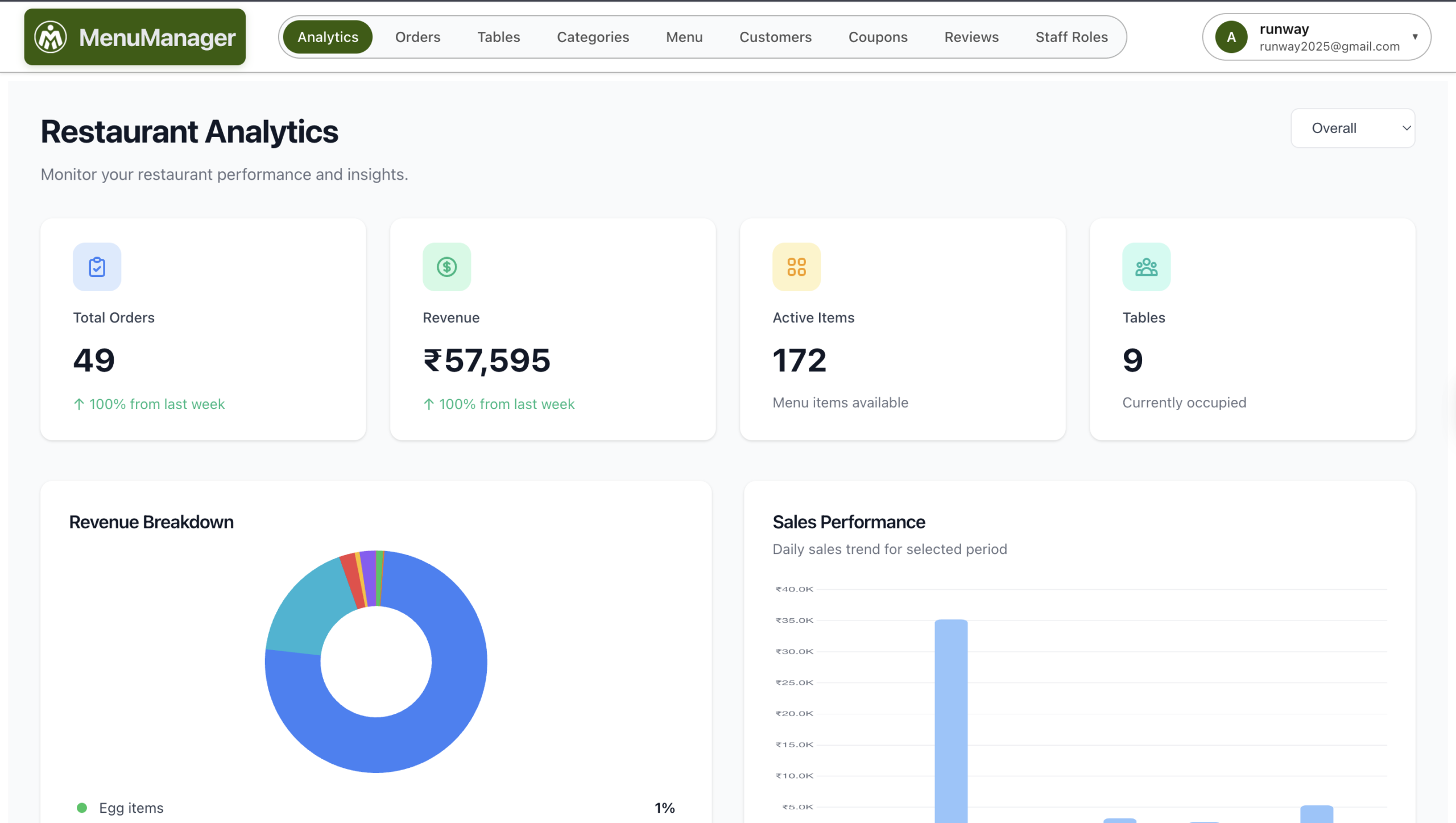
Your marketing efforts work even harder when paired with a well-designed digital menu that follows best practices. For more revenue-boosting tactics, explore our guide on 10 ways to increase restaurant revenue in 2026. See all MenuManager features that can supercharge your restaurant marketing.
Frequently Asked Questions
What are the most effective restaurant marketing strategies in 2026?
The most effective restaurant marketing strategies in 2026 are: (1) Optimizing Google My Business for local search visibility, (2) WhatsApp marketing with 90%+ open rates, (3) Instagram Reels and short-form video content, (4) Building a customer database through digital ordering systems, and (5) Micro-influencer partnerships. Focus on 2-3 strategies executed consistently rather than spreading thin across many channels. Digital-first approaches outperform traditional advertising significantly.
How much should a restaurant spend on marketing?
Most successful restaurants spend 3-6% of revenue on marketing. For a restaurant doing ₹5 lakh monthly revenue, that’s ₹15,000-30,000/month. However, many effective strategies cost nothing: Google My Business optimization, responding to reviews, WhatsApp broadcasts, and social media posting. Start with free channels, track ROI, and only invest in paid channels that return at least 3x your spend. A micro-influencer meal (₹2,000-3,000) often delivers better ROI than ₹20,000 in paid ads.
How can a restaurant get more Google reviews?
Ask at the right moment — right after a customer compliments the food or at the end of a great meal. Make it frictionless: send a direct Google review link via WhatsApp the next day, or print a QR code on bills saying “Loved your meal? Scan to review us.” Respond to every review within 24 hours, including negative ones. How you handle criticism matters more than the criticism itself — future customers watch your responses.
Is WhatsApp marketing effective for restaurants?
WhatsApp marketing is one of the most effective channels for restaurants in India. With 487 million users and 90%+ message open rates (compared to 20% for email), WhatsApp delivers direct reach to customers. Build your database by collecting phone numbers through digital ordering systems. Send birthday discounts, flash sales during slow hours, new menu announcements, and “we miss you” messages. Key rule: maximum 2-3 messages per week to avoid being blocked.
How do digital menus help with restaurant marketing?
Digital menus are a marketing engine disguised as an ordering tool. They automatically capture customer phone numbers with every order (building your WhatsApp/SMS database), enable instant promotions without reprinting costs, allow customers to share your menu link on social media (free advertising), and provide customer behavior data (favorite dishes, order frequency, peak times) for personalized marketing. One Mumbai cafe collected 500 phone numbers in two months and generated ₹18,000 revenue from a single WhatsApp broadcast.
What social media platform is best for restaurant marketing?
Instagram is the #1 platform for restaurants because food is inherently visual. Post 4-5 times per week with high-quality food photos, behind-the-scenes kitchen content, and short cooking videos (Reels get 2.5x more engagement than photos). Best posting times are 11 AM-1 PM and 6 PM-8 PM. Facebook is secondary but useful for local community engagement and event promotion. Respond to every comment and DM within 2 hours — platforms reward engagement with more reach.
{
“@context”: “https://schema.org”,
“@type”: “FAQPage”,
“mainEntity”: [
{
“@type”: “Question”,
“name”: “What are the most effective restaurant marketing strategies in 2026?”,
“acceptedAnswer”: {
“@type”: “Answer”,
“text”: “The most effective restaurant marketing strategies in 2026 are: (1) Optimizing Google My Business for local search visibility, (2) WhatsApp marketing with 90%+ open rates, (3) Instagram Reels and short-form video content, (4) Building a customer database through digital ordering systems, and (5) Micro-influencer partnerships. Focus on 2-3 strategies executed consistently rather than spreading thin across many channels. Digital-first approaches outperform traditional advertising significantly.”
}
},
{
“@type”: “Question”,
“name”: “How much should a restaurant spend on marketing?”,
“acceptedAnswer”: {
“@type”: “Answer”,
“text”: “Most successful restaurants spend 3-6% of revenue on marketing. For a restaurant doing u20b95 lakh monthly revenue, that’s u20b915,000-30,000/month. However, many effective strategies cost nothing: Google My Business optimization, responding to reviews, WhatsApp broadcasts, and social media posting. Start with free channels, track ROI, and only invest in paid channels that return at least 3x your spend. A micro-influencer meal (u20b92,000-3,000) often delivers better ROI than u20b920,000 in paid ads.”
}
},
{
“@type”: “Question”,
“name”: “How can a restaurant get more Google reviews?”,
“acceptedAnswer”: {
“@type”: “Answer”,
“text”: “Ask at the right moment – right after a customer compliments the food or at the end of a great meal. Make it frictionless: send a direct Google review link via WhatsApp the next day, or print a QR code on bills saying “Loved your meal? Scan to review us.” Respond to every review within 24 hours, including negative ones. How you handle criticism matters more than the criticism itself – future customers watch your responses.”
}
},
{
“@type”: “Question”,
“name”: “Is WhatsApp marketing effective for restaurants?”,
“acceptedAnswer”: {
“@type”: “Answer”,
“text”: “WhatsApp marketing is one of the most effective channels for restaurants in India. With 487 million users and 90%+ message open rates (compared to 20% for email), WhatsApp delivers direct reach to customers. Build your database by collecting phone numbers through digital ordering systems. Send birthday discounts, flash sales during slow hours, new menu announcements, and “we miss you” messages. Key rule: maximum 2-3 messages per week to avoid being blocked.”
}
},
{
“@type”: “Question”,
“name”: “How do digital menus help with restaurant marketing?”,
“acceptedAnswer”: {
“@type”: “Answer”,
“text”: “Digital menus are a marketing engine disguised as an ordering tool. They automatically capture customer phone numbers with every order (building your WhatsApp/SMS database), enable instant promotions without reprinting costs, allow customers to share your menu link on social media (free advertising), and provide customer behavior data (favorite dishes, order frequency, peak times) for personalized marketing. One Mumbai cafe collected 500 phone numbers in two months and generated u20b918,000 revenue from a single WhatsApp broadcast.”
}
},
{
“@type”: “Question”,
“name”: “What social media platform is best for restaurant marketing?”,
“acceptedAnswer”: {
“@type”: “Answer”,
“text”: “Instagram is the #1 platform for restaurants because food is inherently visual. Post 4-5 times per week with high-quality food photos, behind-the-scenes kitchen content, and short cooking videos (Reels get 2.5x more engagement than photos). Best posting times are 11 AM-1 PM and 6 PM-8 PM. Facebook is secondary but useful for local community engagement and event promotion. Respond to every comment and DM within 2 hours – platforms reward engagement with more reach.”
}
}
]
}

Leave a Reply