

Restaurant revenue is under pressure from rising costs, changing customer expectations, and increased competition. In 2026, successful restaurants are those that adapt quickly and embrace new technologies while maintaining exceptional service. Here are 10 proven strategies to boost your restaurant’s bottom line.
1. Implement QR Code Ordering
QR code ordering can increase revenue by 25-30% by reducing wait times and increasing table turnover. Customers browse menus, place orders, and pay directly from their smartphones, eliminating bottlenecks during peak hours.
The setup is simple — place QR codes on each table, connect them to your digital menu, and customers scan to order. This frees up your waitstaff to focus on upselling and customer experience rather than taking basic orders. Restaurants using MenuManager’s QR ordering system report average order values increasing by 18-22% because customers browse the full menu with photos and descriptions rather than rushing through a paper menu.
2. Optimize Your Menu Pricing
Use menu engineering to identify high-profit items and promote them strategically. Analyze your cost-to-price ratios — your food cost should ideally be 28-35% of the selling price. Items with high popularity but low margins need price adjustments, while high-margin items need better menu placement.
Use psychological pricing techniques: prices ending in 9 (Rs 249 instead of Rs 250) feel cheaper. Remove currency symbols from digital menus to reduce “price pain.” Place your highest-margin items at the top of each category — customers are 30% more likely to order the first item they see in a section.
3. Offer Online Ordering and Delivery
70% of customers prefer ordering directly from restaurant websites rather than third-party platforms like Zomato or Swiggy that charge 25-35% commission. Build your own online ordering system to save on commission fees and own the customer relationship.
Start with a WhatsApp ordering integration — most Indian customers are already comfortable with WhatsApp. A digital menu with a direct ordering link shared via WhatsApp can capture delivery orders at zero commission cost. Even converting 20% of your third-party orders to direct orders can save Rs 30,000-50,000 monthly for a mid-sized restaurant.
4. Leverage Customer Data Analytics
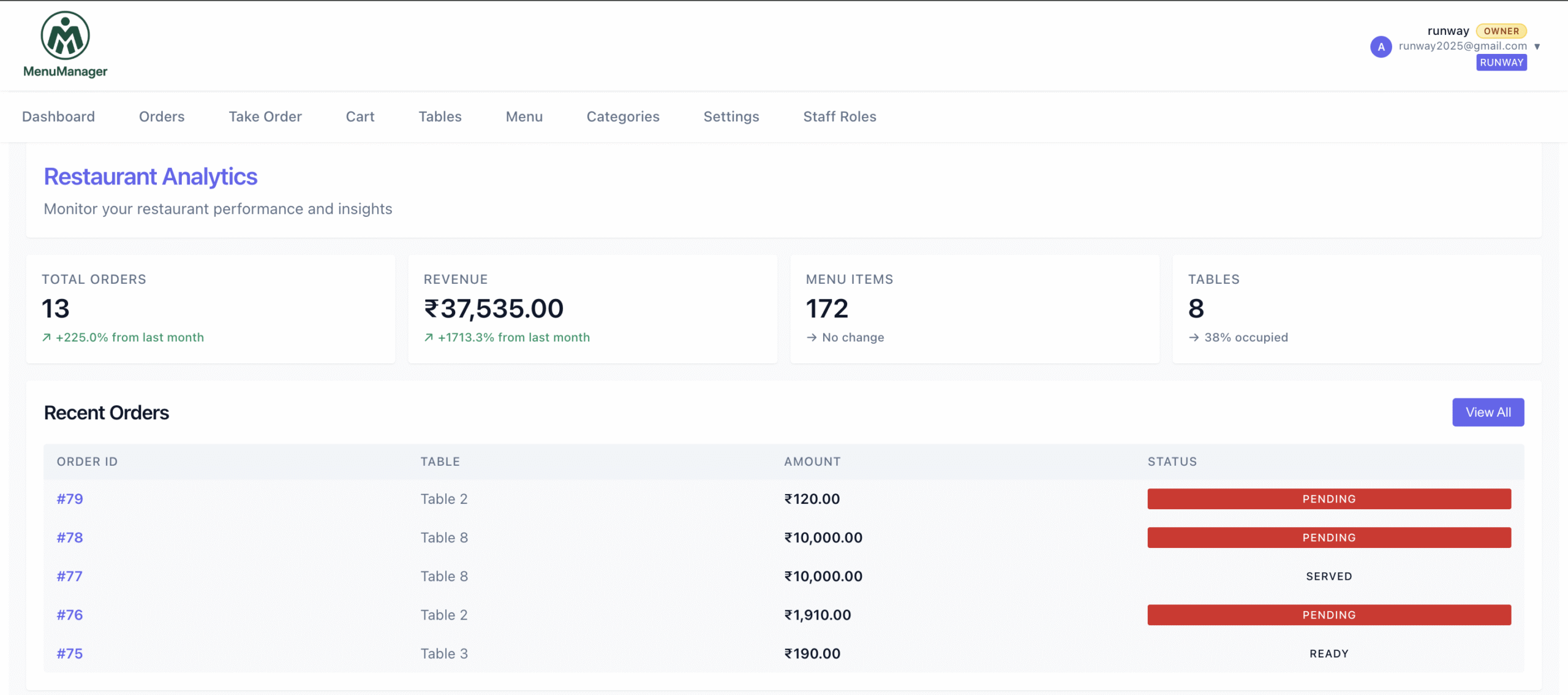
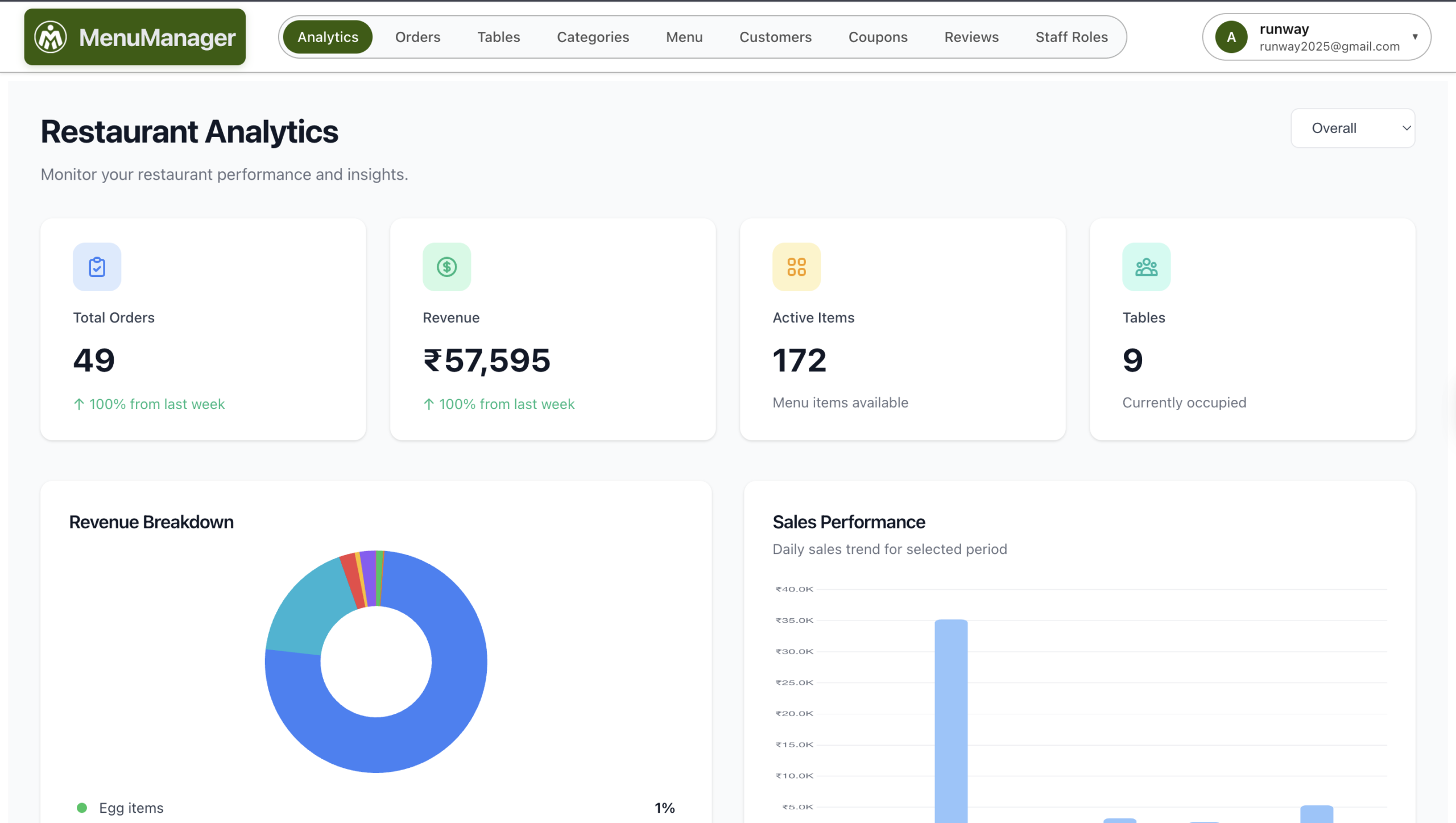
Understanding customer behavior, peak hours, and popular items allows you to make data-driven decisions. Digital ordering systems automatically capture this data — which items sell at which times, average order values, repeat visit frequency, and popular combinations.
Use analytics to optimize staffing (schedule more staff during actual peak hours, not assumed ones), reduce food waste (prep quantities based on real demand), and run targeted marketing campaigns (promote biryani on Fridays if data shows high demand). Restaurants that act on data consistently outperform those relying on gut instinct by 15-25% in revenue.
5. Create Loyalty Programs
Repeat customers spend 67% more than new customers, and acquiring a new customer costs 5x more than retaining an existing one. Digital loyalty programs with rewards and personalized offers keep customers coming back and increase lifetime value.
Keep it simple — a digital stamp card (“Buy 5 meals, get 1 free”) works better than complex points systems. Collect phone numbers through your QR ordering system and send personalized offers via WhatsApp on birthdays, anniversaries, or after a customer hasn’t visited in 30 days. Even a basic loyalty program can increase repeat visits by 20-35%.
6. Upsell with Digital Menus
Digital menus are powerful upselling tools that work 24/7 without any awkwardness. Add high-quality photos to every menu item — dishes with photos get ordered 30% more often. Include “Add-ons” and “Recommended with this” suggestions on each item page.
Strategic placement matters: put your highest-margin items first in each category, highlight “Chef’s Special” or “Most Popular” badges on items you want to push, and suggest beverages and desserts at checkout. Restaurants using MenuManager’s smart upselling features see average order values increase by Rs 80-120 per table without any staff effort.
7. Optimize Table Turnover
Revenue is a function of covers served, not just average order value. If your restaurant seats 40 and averages 2 turns per dinner service, increasing that to 2.5 turns means 20 additional covers per night — potentially Rs 15,000-20,000 in additional daily revenue.
QR code ordering dramatically speeds up the order-to-serve cycle by eliminating the “waiting for the waiter” time. Orders go directly to the kitchen the moment a customer decides, shaving 8-12 minutes off each table’s total time. Combine this with digital payments (no waiting for the bill) and a table management system to maximize seating efficiency during peak hours.
8. Expand Revenue Streams with Catering and Events
Your kitchen and staff are already fixed costs — adding catering, private events, or corporate meal programs utilizes existing capacity during off-peak hours. Corporate lunch deliveries (Monday-Friday) can generate consistent weekday revenue when dine-in traffic is typically lower.
Create a separate catering menu with items that travel well and can be prepared in bulk. Share it as a digital menu link via WhatsApp to local businesses. Even 2-3 regular corporate clients ordering weekly lunches can add Rs 50,000-1,00,000 in monthly revenue with minimal additional effort.
9. Reduce Operational Costs with Automation
Every rupee saved in operations goes directly to your bottom line. Automate repetitive tasks: digital ordering eliminates order-taking errors (which cost restaurants 3-5% of revenue in remakes), automated KOT (Kitchen Order Tickets) systems speed up kitchen workflows, and digital inventory tracking prevents over-ordering.
Restaurants that switch from manual to digital ordering typically reduce staffing needs by 1-2 servers per shift without affecting service quality. At Rs 12,000-15,000 per server monthly, this translates to Rs 24,000-30,000 in monthly savings. Combined with reduced food waste from better inventory management, automation can improve net margins by 8-12%.
10. Strengthen Your Local SEO and Online Presence
76% of people who search “restaurants near me” visit one within 24 hours. Yet most restaurants neglect their Google Business Profile — the single most important free marketing tool available. Ensure your profile has updated hours, menu, photos (add new ones monthly), and actively respond to every Google review.
Encourage happy customers to leave Google reviews by placing a QR code linking to your review page on the bill or table tent. Restaurants with 50+ reviews and a 4.2+ star rating appear significantly higher in local search results. Combine this with a simple Instagram presence (post 3-4 food photos weekly) and you’ll see a measurable increase in walk-in customers within 60-90 days.
The Bottom Line
Increasing restaurant revenue in 2026 requires a combination of technology adoption, operational efficiency, and customer-centric strategies. You don’t need to implement all 10 at once — start with QR code ordering and menu optimization for the fastest impact, then layer in loyalty programs, upselling, and SEO as you build momentum. The restaurants that will thrive are those that use data and technology to work smarter, not harder.
In 2026, controlling costs is just as important as growing revenue. Our guide on how to reduce restaurant operating costs covers eight proven strategies to protect your margins. And with LPG prices hitting record highs, don’t miss our LPG shortage survival guide for practical energy-saving strategies.
One of the fastest ways to boost revenue is implementing a QR ordering system that increases cart values by 25-35%. Cutting food waste also directly improves your bottom line — read our guide on how to reduce food waste in your restaurant. View MenuManager pricing plans to get started with digital ordering today.
Frequently Asked Questions
How much can QR code ordering increase restaurant revenue?
Restaurants using QR code ordering systems typically see a 25-30% increase in revenue through a combination of higher average order values (customers browse the full menu and add more items), faster table turnover (orders go directly to kitchen), and reduced order errors. The increase comes from eliminating friction in the ordering process and enabling automatic upselling.
What is the most cost-effective way to increase restaurant revenue?
Menu optimization and upselling through digital menus deliver the highest ROI with near-zero additional cost. Simply adding photos to menu items, placing high-margin dishes first in each category, and suggesting add-ons at checkout can increase average order values by 18-22%. This requires no additional staff, ingredients, or equipment — just a well-configured digital menu.
How do I reduce dependency on Zomato and Swiggy commissions?
Build a direct ordering channel. Create a digital menu with online ordering capability and share the link via WhatsApp, Instagram bio, and Google Business Profile. Incentivize direct orders with a small discount (5-10%) — this is still far cheaper than the 25-35% commission on aggregator platforms. Even converting 20-30% of your delivery orders to direct orders can save Rs 30,000-80,000 monthly.
How important is Google Business Profile for restaurant revenue?
Extremely important. 76% of people who search “restaurants near me” visit a restaurant within 24 hours. An optimized Google Business Profile with updated photos, menu, hours, and 50+ reviews with a 4.2+ star rating can drive 30-50 additional walk-in customers per month. It’s the highest-ROI marketing channel for local restaurants and it’s completely free.
What technology should a restaurant invest in first to boost revenue?
Start with a QR code digital menu and ordering system. It delivers the fastest ROI by simultaneously increasing average order values, speeding up table turnover, reducing staffing needs, and capturing customer data for future marketing. A system like MenuManager can be set up in under a day and typically pays for itself within the first week of operation.
How can a small restaurant compete with larger chains on revenue?
Small restaurants have advantages chains don’t — personal relationships, menu flexibility, and lower overhead. Focus on building a loyal customer base through personalized service and a simple loyalty program. Use digital ordering to operate efficiently with fewer staff. Dominate local SEO (Google reviews + Google Business Profile) since you only need to win in your neighborhood, not citywide. Small restaurants that embrace technology often achieve higher per-seat revenue than chain restaurants.

Leave a Reply