

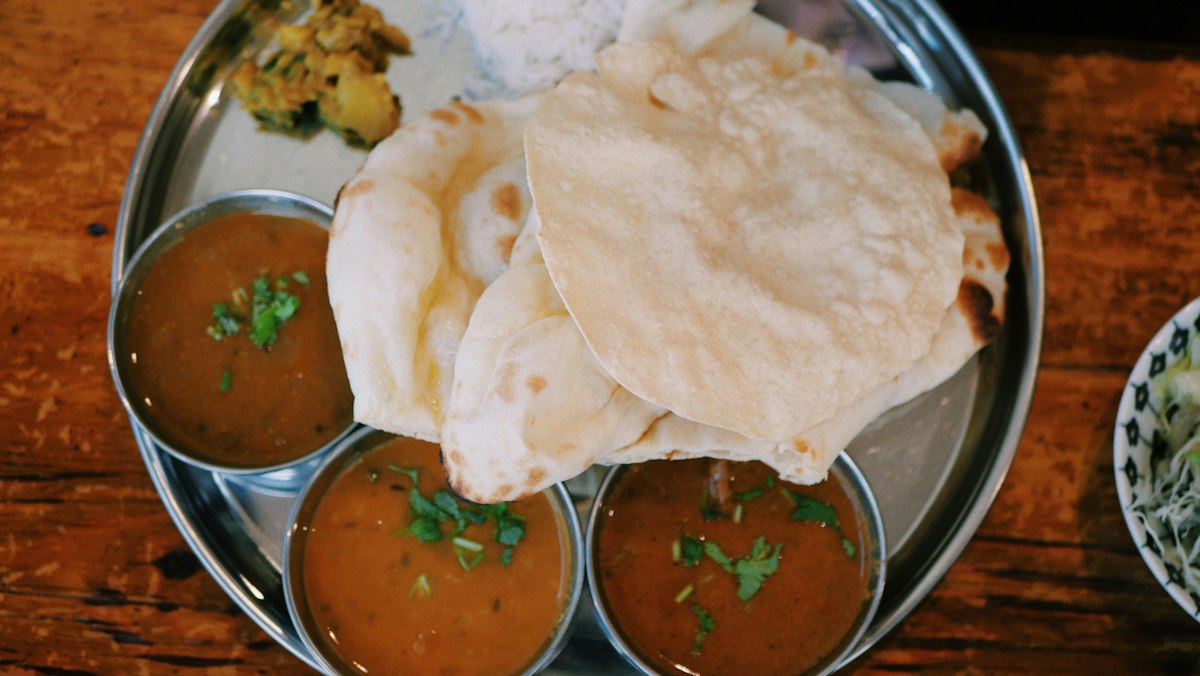
South India is where Indian cuisine takes a sharp turn. Forget the heavy cream gravies and tandoori meats of the North — down here, the kitchen runs on coconut oil, curry leaves, tamarind, and rice. The food is lighter but no less flavourful, shaped by tropical coastlines, ancient spice trade routes, and a vegetarian tradition that’s produced some of the most inventive plant-based cooking on earth.
For travelers, South Indian food is often a revelation. The dosa you’ve had at a restaurant abroad — that limp, pale crepe — bears almost no resemblance to a fresh masala dosa in Bangalore, crackling with ghee, stretching two feet across a steel plate. The biryani in Hyderabad is an entirely different animal from the Lucknowi version up north. And the fish curries of Kerala, cooked in clay pots with raw mango and kokum, taste like nothing else in the country.
This guide covers 5 iconic South Indian dishes every first-time traveler must try — what they taste like, what goes into them, where to find the best versions, and how locals actually eat them. From the royal kitchens of Hyderabad to the backwaters of Kerala, these are the dishes that define South India.
1. Hyderabadi Dum Biryani — Telangana
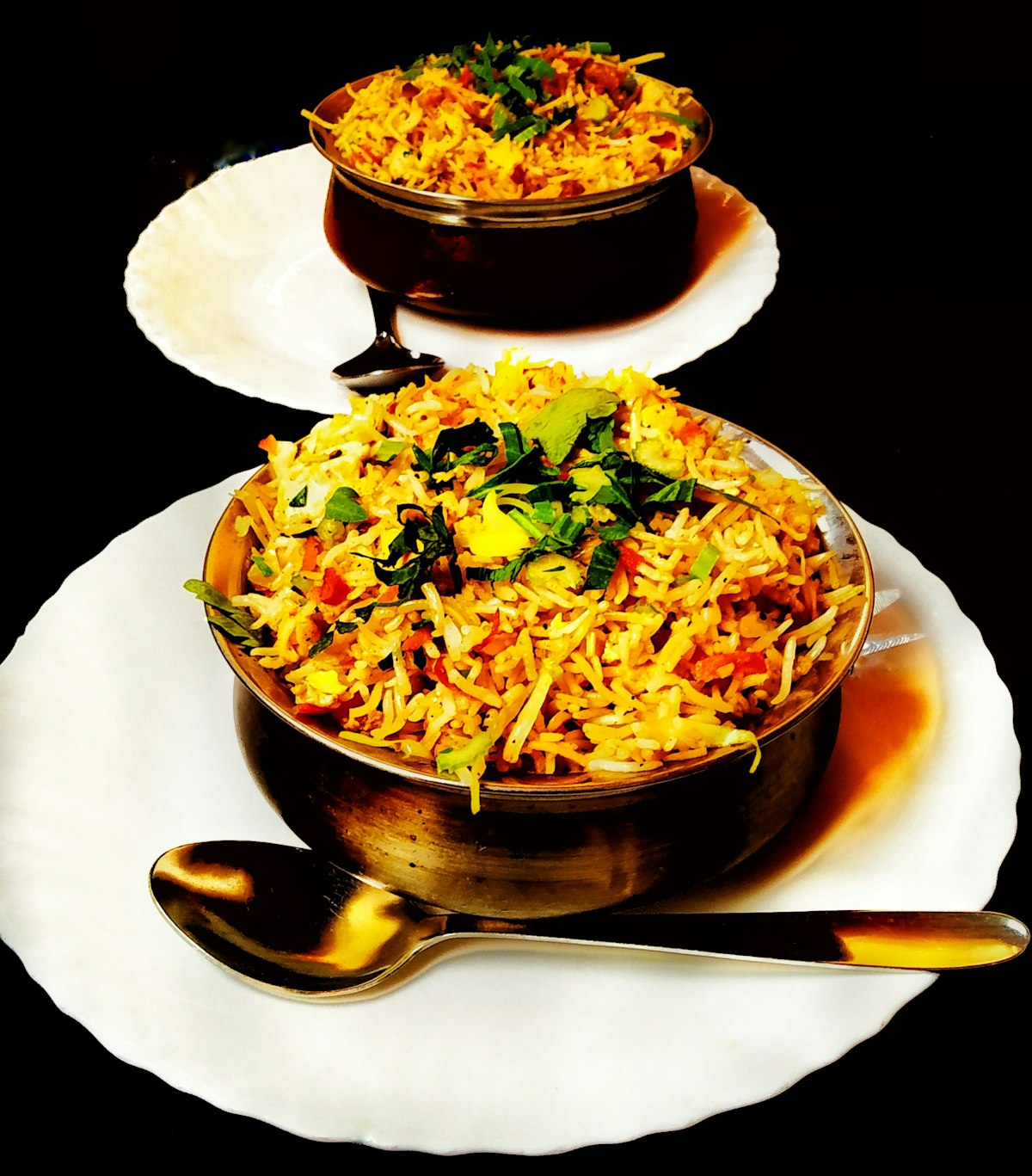
If you only eat one dish in South India, make it Hyderabadi biryani. This isn’t just a rice dish — it’s a cultural institution. Hyderabad’s biryani tradition dates back to the Nizam rulers of the 18th century, and the city takes it more seriously than most countries take their national dishes. There are biryani restaurants in Hyderabad that have served nothing else for over a hundred years.
What separates Hyderabadi biryani from every other version in India is the kacchi (raw) method. Raw marinated meat is layered with partially cooked basmati rice in a heavy-bottomed pot called a handi, sealed with dough, and slow-cooked over a low flame. The meat cooks entirely in its own juices and the steam from the rice. Every grain is separate, stained with saffron and fried onions, and the meat at the bottom is fall-off-the-bone tender with a spice intensity that hits you in waves.
Key Ingredients:
- Basmati rice (aged, long-grain)
- Goat meat (the only authentic choice in Hyderabad)
- Yogurt, ginger-garlic paste, green chillies (for meat marinade)
- Saffron strands soaked in warm milk
- Birista (deep-fried onion slices — the flavour backbone)
- Whole spices: bay leaf, green cardamom, cloves, cinnamon, mace, star anise
- Mint and coriander leaves (layered generously between rice and meat)
- Ghee and atta dough (to seal the handi)
Traveler Tip: The biryani wars in Hyderabad are real — locals will argue for hours about which restaurant is best. The two legendary spots are Paradise and Bawarchi in the old city. Order the goat (mutton) biryani, never chicken — that’s what Hyderabadis eat. It comes with mirchi ka salan (green chilli curry) and raita — mix a spoonful of each into every bite. Eat with your hands, not a spoon. Lunch is the traditional biryani meal, not dinner.
2. Masala Dosa — Karnataka
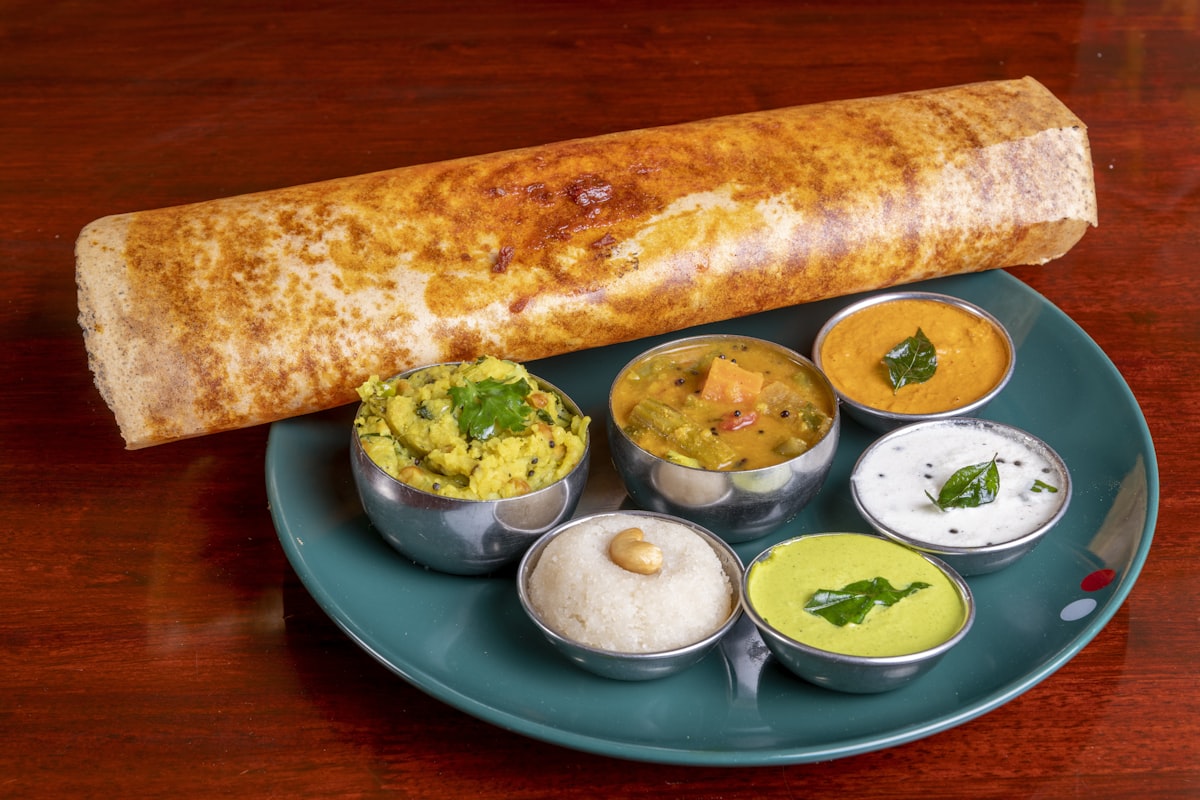
The masala dosa is to South India what chole bhature is to the North — the definitive breakfast. This thin, crispy crepe made from fermented rice and lentil batter, stuffed with spiced potato filling, and served with coconut chutney and sambar (lentil-vegetable stew) is eaten by hundreds of millions of people every single morning across South India.
The magic of a great dosa is in the fermentation. The batter — a precise ratio of rice to urad dal — is soaked, ground, and left to ferment overnight (or longer in cooler climates). This fermentation gives the dosa its characteristic tang, its bubbling texture, and its ability to crisp up on a hot griddle into something that shatters when you break it. The best dosas are paper-thin at the edges, golden-brown underneath, and large enough to hang off both sides of the plate.
Key Ingredients:
- Rice (usually parboiled or idli rice) and urad dal (black gram) — soaked and ground into batter
- Fenugreek seeds (a small amount, added during soaking for fermentation and crispness)
- Potato filling: boiled potatoes, onions, mustard seeds, curry leaves, turmeric, green chillies
- Coconut chutney: fresh coconut, roasted chana dal, green chillies, tempered with mustard seeds
- Sambar: toor dal, tamarind, drumstick, carrots, onion, sambar powder
- Ghee or oil (for cooking the dosa on a flat griddle)
Traveler Tip: The best masala dosa in India is in Bangalore (now Bengaluru) — specifically at the old Darshini-style restaurants like Vidyarthi Bhavan (since 1943), MTR (Mavalli Tiffin Rooms, since 1924), and CTR (Central Tiffin Room). In Chennai, the Udupi restaurants are the places to go. Order a ghee roast masala dosa for extra crispness. Eat it with your hands — tear a piece of dosa, scoop some potato, dip in chutney, and follow with a sip of sambar. Breakfast time (7-10 AM) is when dosas are freshest.
3. Kerala Fish Curry (Meen Curry) — Kerala
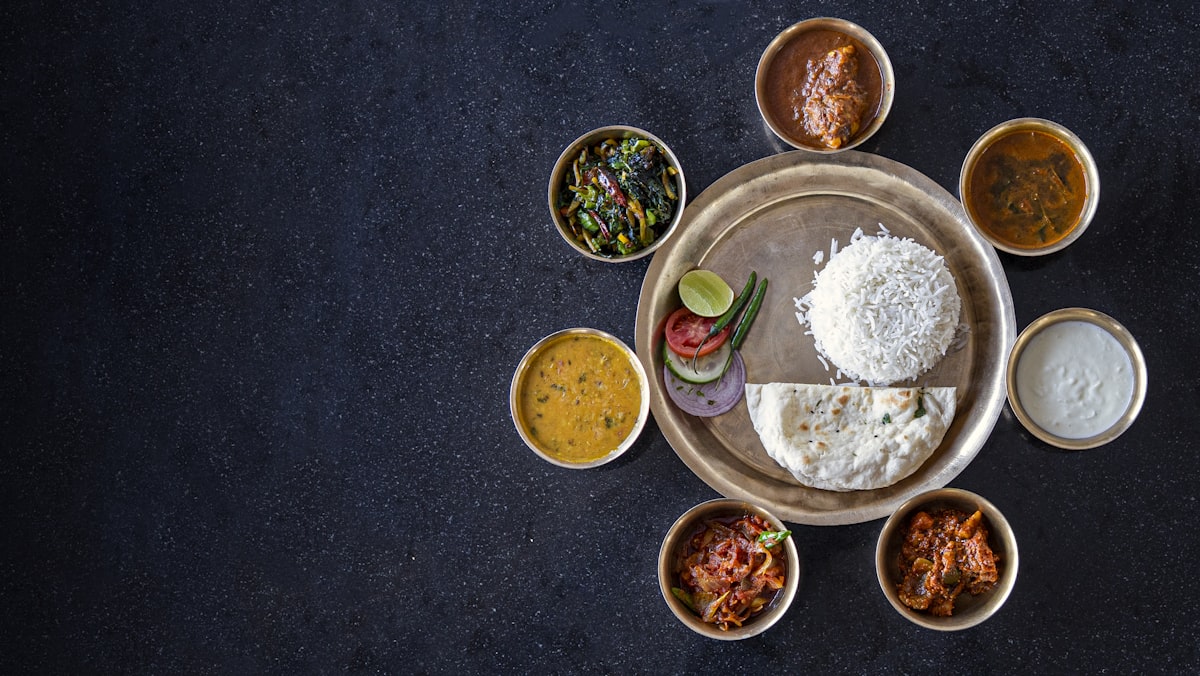
Kerala has 580 kilometres of coastline, and fish curry is the state’s daily bread — or more accurately, its daily rice. Almost every household in Kerala eats some version of fish curry with rice for lunch, and the variations are endless. But the classic meen curry — fish simmered in a tangy, bright-red coconut and kokum gravy — is the version that defines Kerala cuisine to the outside world.
What makes Kerala fish curry unique is the kudampuli (Malabar tamarind or kokum) — a dried, smoky fruit that gives the curry its signature sourness. Combined with coconut milk, red Kashmiri chilli (for colour without excessive heat), and a tempering of mustard seeds and curry leaves sizzled in coconut oil, the result is a curry that’s simultaneously creamy, tangy, and aromatic. The fish — usually ayala (mackerel) or karimeen (pearl spot) — absorbs the gravy overnight, which is why Keralites insist that fish curry tastes better the next day.
Key Ingredients:
- Fish: mackerel (ayala), pearl spot (karimeen), or kingfish (neymeen)
- Coconut milk (freshly extracted — first and second press)
- Kudampuli / kokum (Malabar tamarind — the defining souring agent)
- Kashmiri red chilli powder (for deep red colour without excessive heat)
- Turmeric powder
- Shallots (small onions), ginger, garlic, green chillies
- Curry leaves, mustard seeds, fenugreek seeds (for tempering)
- Coconut oil (always — never any other oil)
Traveler Tip: The best fish curry is in Kerala’s coastal towns — Kochi (Cochin), Alleppey, and Kozhikode (Calicut). Look for small family-run restaurants or toddy shops (palm wine taverns that serve incredible seafood). Ask for meen curry with kappa (tapioca) — that’s the traditional Kerala combination, not rice. If you’re visiting the backwaters of Alleppey, the houseboat kitchens serve excellent fish curry made from the morning’s catch. The curry should be bright red and tangy — if it’s brown and mild, it’s not authentic Kerala-style.
4. Chettinad Chicken — Tamil Nadu
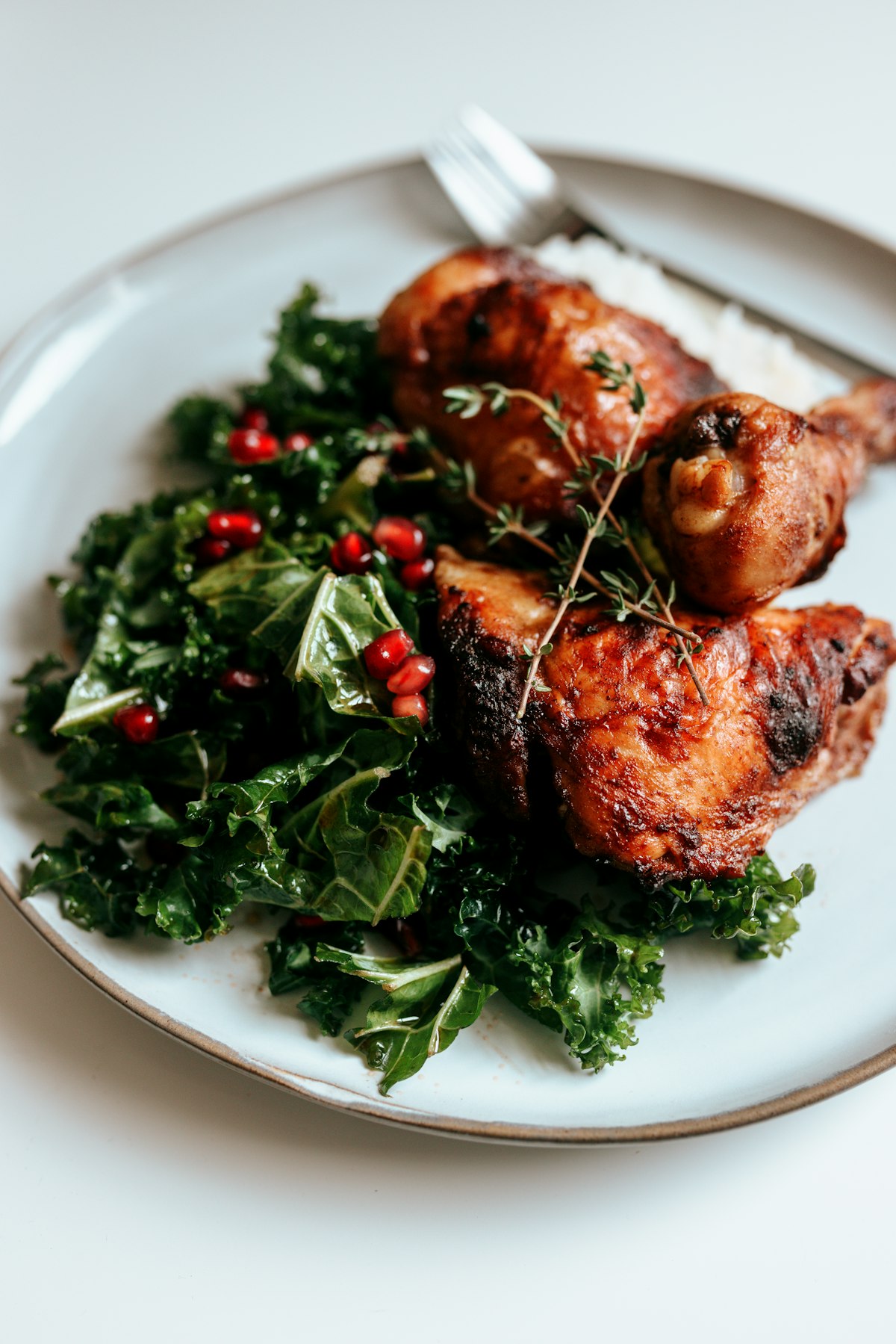
Chettinad cuisine comes from the Chettinad region of Tamil Nadu, home to the Nattukotai Chettiar community — a wealthy merchant class that traded across Southeast Asia for centuries. They brought back spices from their trading voyages and developed one of India’s most intensely flavoured cuisines. Chettinad chicken is the flagship dish: a dry, fiery curry where freshly ground spices are the entire point.
What sets Chettinad cooking apart is the sheer volume and variety of spices used, all freshly roasted and ground for each dish. Black pepper — not chilli — provides the primary heat. Kalpasi (stone flower), marathi mokku (dried flower pods), and star anise give the curry an aromatic complexity you won’t find anywhere else in India. The chicken is cooked dry with onions and tomatoes until the gravy clings to every piece, each bite delivering an escalating wave of spice that builds and builds.
Key Ingredients:
- Chicken (country chicken / nattu kozhi preferred — smaller, tougher, more flavourful)
- Black pepper (the star spice — used generously)
- Kalpasi (stone flower / dagad phool — a lichen, earthy and musky)
- Marathi mokku (dried flower pods)
- Fennel seeds, cumin, coriander seeds, star anise
- Red chillies (dried, for colour and additional heat)
- Shallots, ginger, garlic, curry leaves
- Coconut (freshly grated, ground into the masala paste)
- Sesame oil or gingelly oil (the traditional cooking fat)
Traveler Tip: For authentic Chettinad chicken, you need to go to Karaikudi or Sivaganga in Tamil Nadu’s Chettinad region — or to the Chettinad restaurants in Chennai (try Anjappar or The Bangala in Karaikudi for the real deal). The spice level is genuinely high, even by Indian standards. If you can’t handle heavy spice, order Chettinad egg curry instead — same spice profile, slightly milder. Pair with appam (rice hoppers) or plain steamed rice. Don’t drink water to cool the heat — eat a spoonful of curd rice instead.
5. Appam with Stew — Kerala
If Chettinad chicken represents South India’s fiery side, appam with stew is its gentle counterpart. This Kerala breakfast combination — soft, bowl-shaped rice pancakes (appam) served with a mild coconut milk stew — is comfort food at its most refined. It’s what Kerala families eat on Sunday mornings, what grandmothers make when you’re sick, and what you’ll crave long after you’ve left the state.
The appam is made from fermented rice batter with a touch of coconut milk, swirled in a small wok-like pan called an appachatti. The edges cook thin and lacy while the centre stays thick, soft, and spongy — creating a natural bowl that holds the stew perfectly. The stew itself is the opposite of a typical Indian curry: no heavy spices, no tomato base. Just chicken or vegetables simmered gently in coconut milk with whole spices — cardamom, cloves, cinnamon — and finished with curry leaves. It’s subtle, creamy, and deeply soothing.
Key Ingredients:
- Rice (raw rice, soaked and ground), coconut milk, yeast or toddy (for fermentation)
- Sugar (a pinch, to aid fermentation)
- For the stew: chicken or mixed vegetables (potato, carrot, beans, green peas)
- Coconut milk (thick first extract and thin second extract)
- Whole spices: cinnamon stick, cloves, green cardamom, bay leaf
- Shallots, ginger, green chillies, curry leaves
- Coconut oil (for tempering)
- No tomatoes, no heavy spice powders — the stew must stay white and mild
Traveler Tip: Appam with stew is a breakfast or dinner dish — you won’t find it at lunch. The best versions are in Kochi’s Fort Kochi area and in homestays across Kerala’s backwater regions. Order chicken stew if you eat meat, or vegetable stew for the vegetarian version — both are equally good. The appam must be eaten fresh; it doesn’t travel well. Ask for egg appam as well — same batter with an egg cracked into the centre, fried until the edges are crisp and the yolk is still runny. It’s extraordinary.
How to Eat Your Way Through South India
South India’s food map is as diverse as the North, but with a completely different flavour profile. Here’s what to prioritise in each state:
- Telangana (Hyderabad): Biryani capital of India. Also try haleem (slow-cooked meat and wheat porridge) during Ramadan, mirchi bajji (stuffed chilli fritters), and Irani chai with Osmania biscuits at old-city cafes.
- Karnataka (Bangalore, Mysore, Udupi): The dosa heartland. Bangalore is India’s best city for South Indian breakfast. Also try bisi bele bath (spiced rice-lentil dish), Mysore pak (ghee-based sweet), and Udupi meals (the original South Indian vegetarian thali).
- Tamil Nadu (Chennai, Madurai, Chettinad): The spiciest food in South India. Filter coffee is a religion here. Try kothu parotta (shredded flatbread stir-fried with egg and meat), idiyappam (string hoppers), and the full Chettinad spread.
- Kerala (Kochi, Alleppey, Kozhikode): Coconut in everything, and that’s not a complaint. Fish curry, appam, puttu and kadala (steamed rice cylinders with chickpea curry), Kerala parotta (flaky layered bread), and banana chips fried in coconut oil.
One thing unites all of South India: rice is king. Unlike the North where wheat-based breads dominate, every South Indian meal revolves around rice — as dosa, idli, plain steamed rice, or appam. Embrace it, and eat with your right hand for the full experience.
The Bottom Line
South Indian food is a different world from what most international travelers expect when they think of “Indian cuisine.” It’s lighter, tangier, coconut-driven, and built around rice rather than bread. These 5 dishes — the legendary Hyderabadi biryani, the crispy masala dosa, the tangy Kerala fish curry, the fiery Chettinad chicken, and the gentle appam with stew — represent the full spectrum of what the South has to offer.
The beauty of South Indian food is that you can experience all of it on a relatively compact trip. A route from Hyderabad → Bangalore → Chennai → Madurai → Kochi covers all five dishes and every major culinary tradition in the region. And unlike the North, where winter is prime eating season, South India’s food is perfect year-round.
Exploring other regions? Read our guides to North India’s iconic dishes, East India’s hidden food gems, and West India’s street food trail. If you’re a restaurant owner looking to showcase regional specialities, set up your QR code menu to highlight local dishes that travelers actively search for.

Leave a Reply