

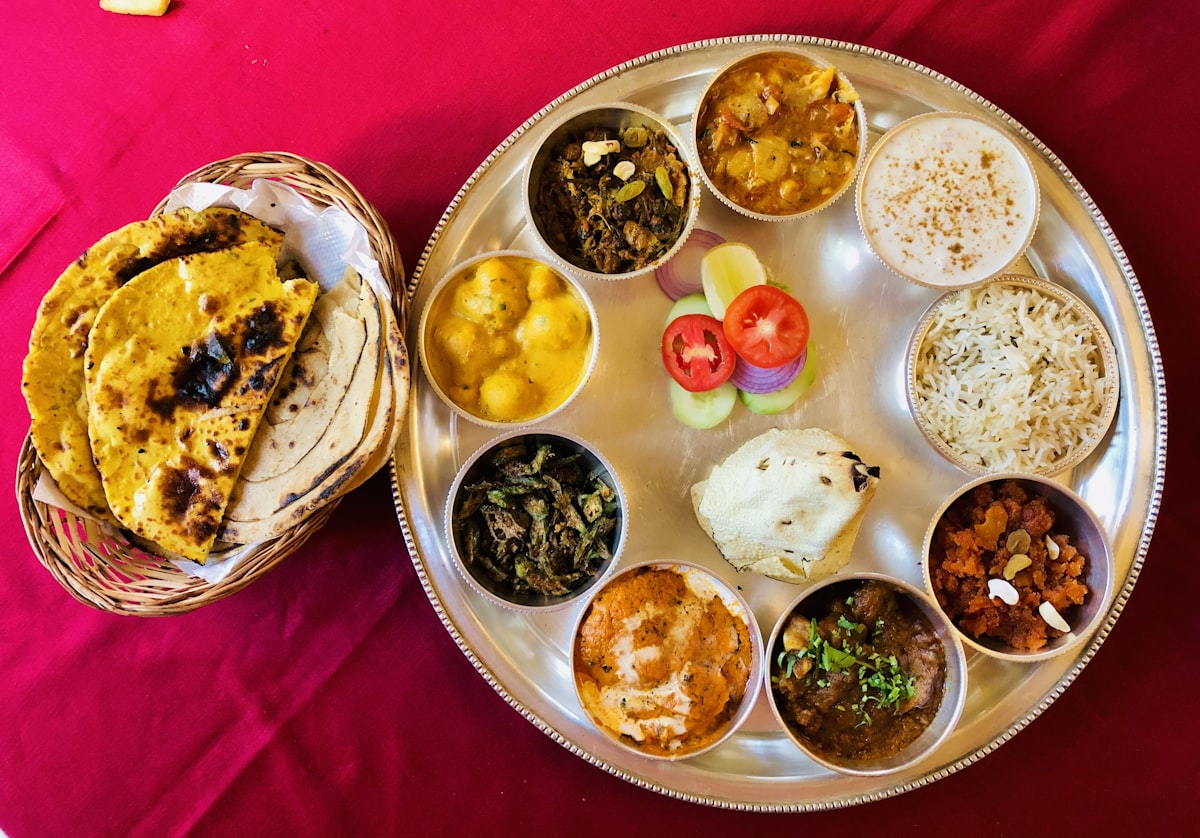
North India is where India’s most globally recognized cuisine comes from. The creamy curries of Delhi, the tandoori meats of Punjab, the royal biryanis of Lucknow, the ghee-soaked meals of Rajasthan — this region’s food is bold, aromatic, and deeply satisfying in a way that stays with you long after the trip ends.
But here’s the thing most travel guides won’t tell you: the North Indian food you’ve tried at restaurants abroad is a shadow of what you’ll find on the ground. A butter chicken in Old Delhi tastes nothing like the one at your local Indian takeaway. A chole bhature eaten hot off a roadside tawa in Chandni Chowk at 8 AM is an entirely different experience from the restaurant version.
This guide covers 5 iconic North Indian dishes every first-time traveler must try — what they are, what goes into them, where to find the best versions, and how locals actually eat them. Whether you’re landing in Delhi, driving through Punjab, exploring Lucknow’s old city, or crossing the deserts of Rajasthan, these are the dishes that define North India.
1. Butter Chicken — Delhi
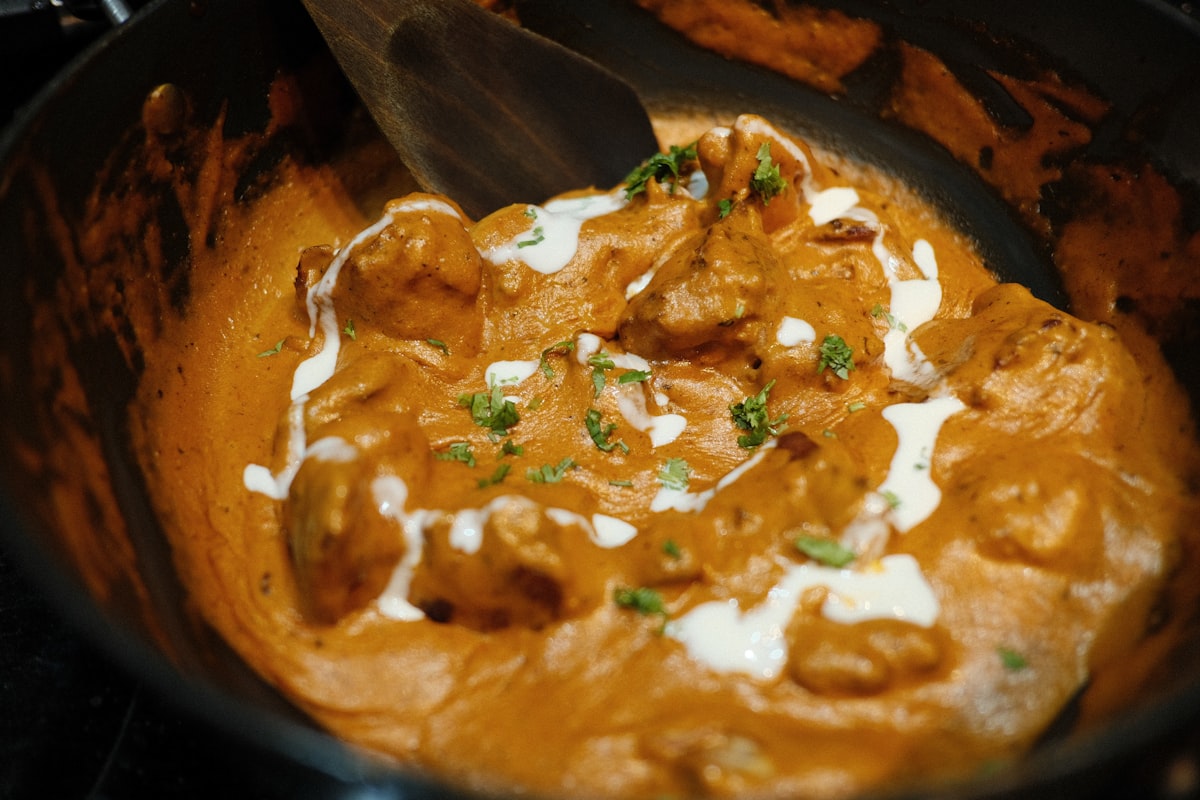
Butter chicken — or murgh makhani — is the single most ordered Indian dish on the planet. It was invented in the 1950s at Moti Mahal restaurant in Delhi’s Daryaganj neighbourhood, when leftover tandoori chicken was simmered in a rich tomato-butter-cream gravy. That accident became India’s greatest culinary export.
What makes authentic Delhi butter chicken different from the international versions? The gravy is lighter and more tomato-forward than the heavy cream sauces you’ll find abroad. The chicken is always tandoori-cooked first — charred, smoky, and slightly dry — before being folded into the sauce. The result is a dish with layers of flavour: smoke from the tandoor, sweetness from the tomatoes, richness from the butter, and a gentle warmth from the spices.
Key Ingredients:
- Chicken (bone-in thigh or leg, tandoori-roasted)
- Tomatoes (fresh, pureed into a silky base)
- Butter and fresh cream
- Kasuri methi (dried fenugreek leaves — the signature flavour)
- Ginger-garlic paste
- Garam masala, red chilli powder, turmeric
- Sugar (a small amount to balance the tomato acidity)
- Green cardamom and bay leaf
Traveler Tip: Order butter chicken with butter naan, not rice — that’s how Delhi locals eat it. The naan soaks up the gravy perfectly. For the most authentic experience, head to Old Delhi’s Daryaganj area where the dish was born. Avoid tourist-trap restaurants near Connaught Place; the best butter chicken is at neighbourhood joints where locals outnumber tourists 10:1.
2. Chole Bhature — Punjab
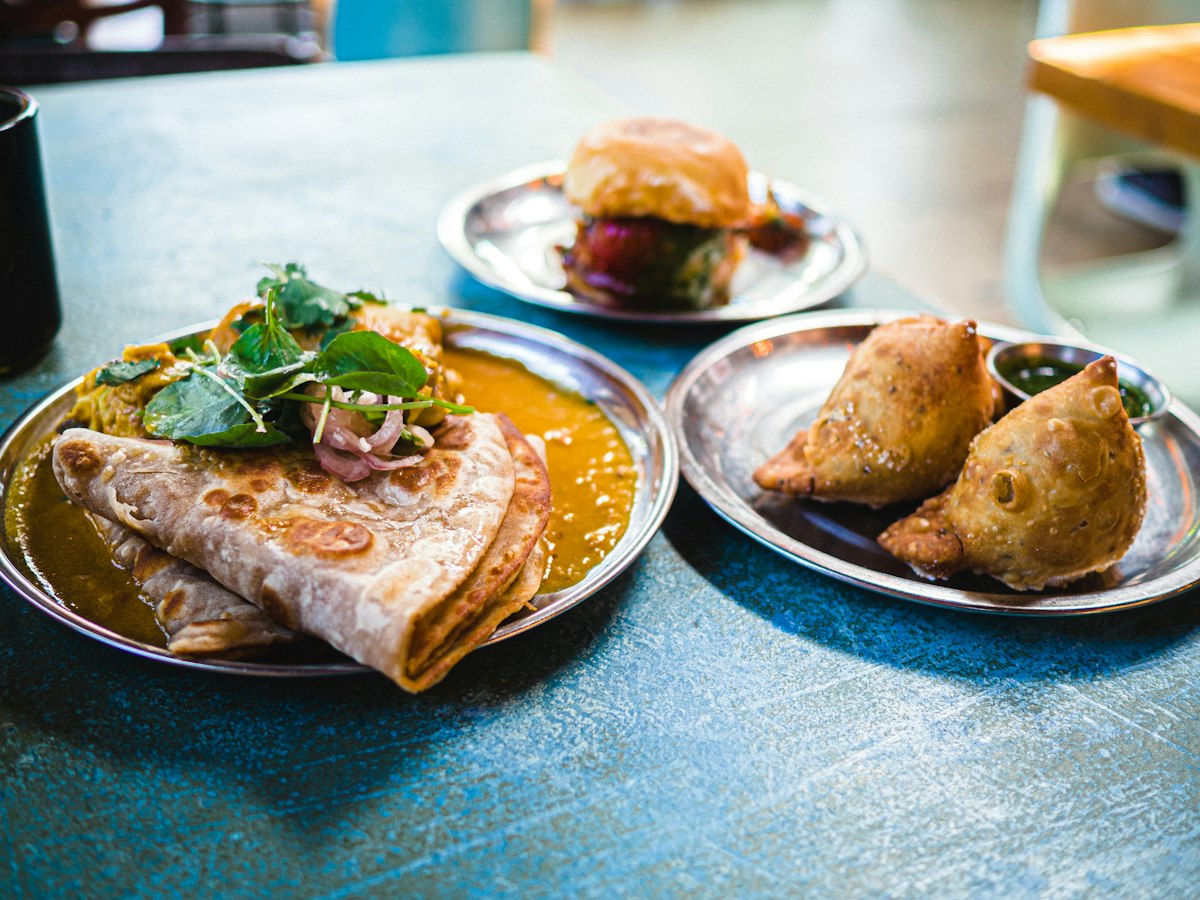
If butter chicken is North India’s most famous dinner, chole bhature is its most beloved breakfast. This Punjabi street food combination — spicy chickpea curry (chole) served with deep-fried puffy bread (bhature) — is what millions of North Indians eat to start their day. It’s heavy, unapologetically oily, and absolutely glorious.
The magic of great chole bhature is in the chickpea curry. The best versions use a dark, complex spice blend called chole masala that includes dried pomegranate seeds, black cardamom, and sometimes even a tea bag simmered in the cooking water to give the chickpeas their signature dark colour. The bhature — made from maida flour leavened with yogurt — should puff up into golden balloons when fried, crisp on the outside and soft within.
Key Ingredients:
- Kabuli chana (white chickpeas, soaked overnight)
- Onions, tomatoes, ginger, garlic, green chillies
- Chole masala (amchur, anardana, black cardamom, cinnamon)
- Tea bag or tea leaves (for deep colour)
- Maida (refined flour), yogurt, baking soda (for bhature)
- Oil for deep frying
- Served with: pickled onions, green chutney, lemon wedge
Traveler Tip: Eat chole bhature before 10 AM — the best shops sell out by late morning. In Delhi, the legendary spots are in Chandni Chowk and Sita Ram Diwan Chand near Paharganj. In Amritsar, any dhaba near the Golden Temple serves excellent chole bhature. Look for the stall with the longest queue of locals — that’s always the right one.
3. Lucknowi Biryani — Awadh (Lucknow)
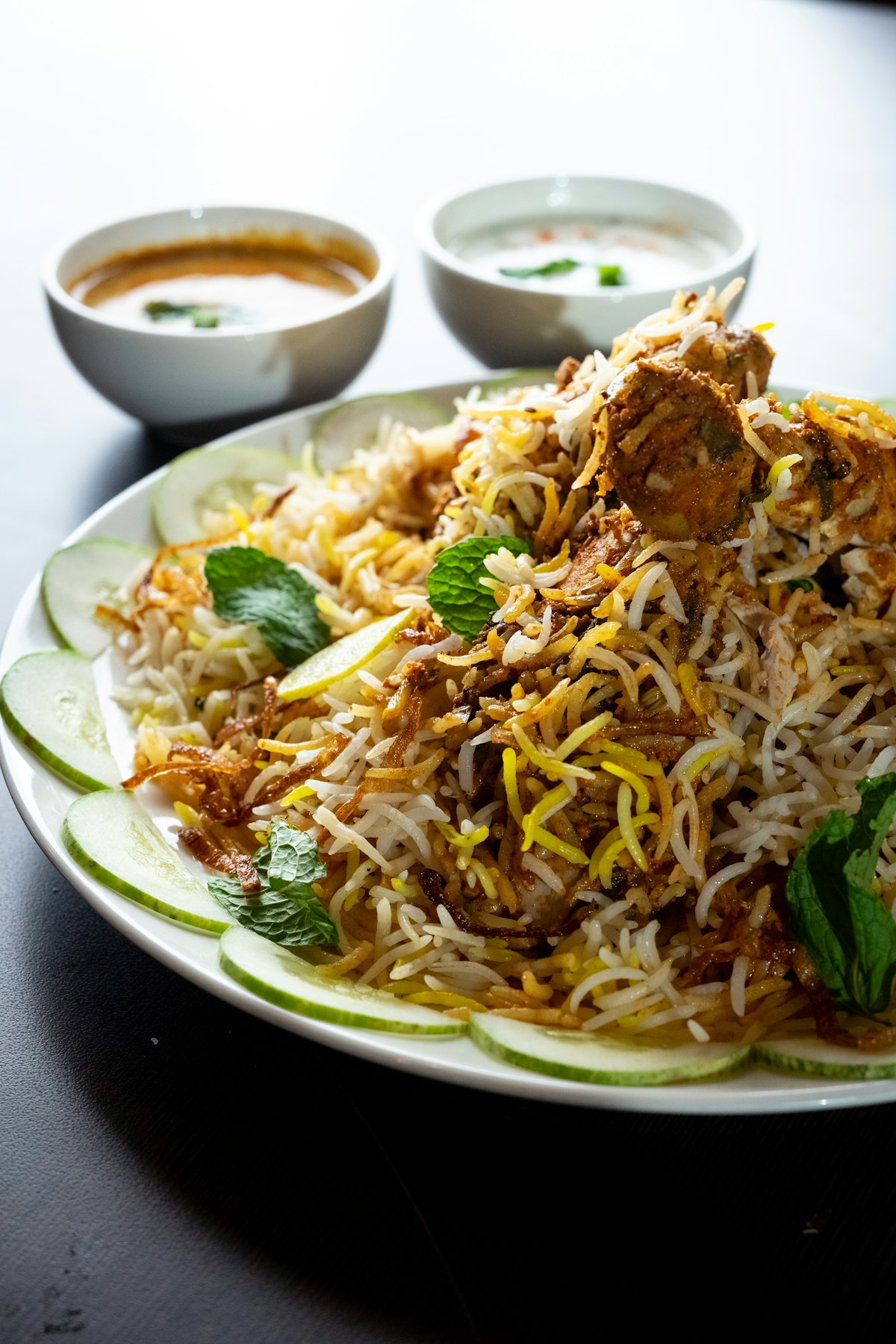
India has two great biryani traditions, and they couldn’t be more different. While Hyderabadi biryani is bold and spicy, Lucknowi biryani (also called Awadhi biryani) is subtle, fragrant, and refined — a product of the Mughal royal kitchens where cooks competed to create the most elegant dishes. This is aristocratic food, and you can taste the refinement in every bite.
The secret is the dum technique: raw marinated meat and partially cooked rice are layered in a heavy-bottomed pot, sealed with dough, and slow-cooked over the lowest possible flame. The meat steams in its own juices, the rice absorbs the spiced vapours, and saffron-infused milk creates golden streaks throughout. When the seal is broken at the table, the aroma that rises is worth the trip to Lucknow alone.
Key Ingredients:
- Basmati rice (aged, long-grain — never short-grain)
- Goat meat or chicken (goat is traditional)
- Saffron strands soaked in warm milk
- Whole spices: green cardamom, cloves, star anise, mace, cinnamon
- Fried birista (crispy onions — the base of all Awadhi flavour)
- Rose water and kewra water (for fragrance)
- Yogurt, ginger-garlic paste
- Ghee and atta dough (to seal the pot)
Traveler Tip: Lucknowi biryani is lighter and more aromatic than Hyderabadi biryani — if you find it mild, that’s by design. The best biryani in Lucknow is found in the old city (Aminabad and Chowk areas), not at hotel restaurants. Order gosht (goat) biryani for the authentic experience. Always pair it with raita (yogurt condiment) and korma on the side for the full Awadhi meal.
4. Dal Makhani — Punjab
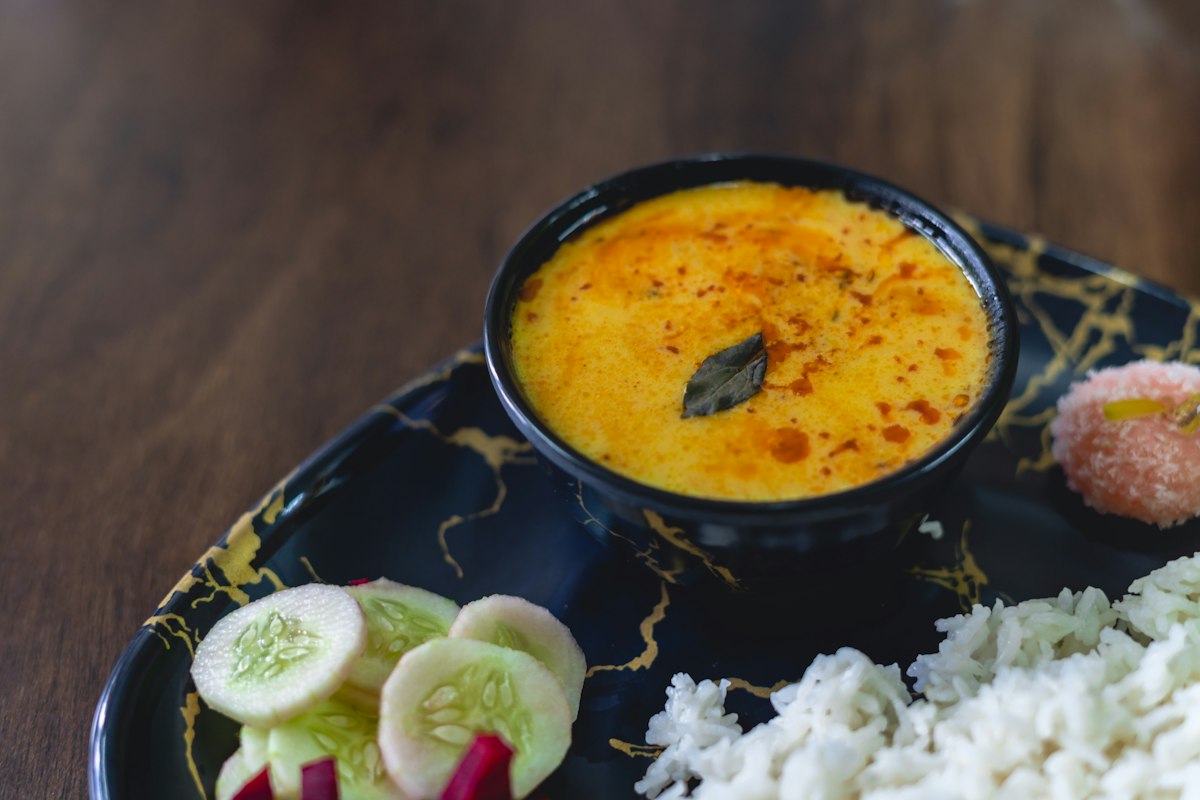
India is the world’s largest consumer of lentils, and dal makhani is the undisputed king of Indian lentil dishes. This Punjabi creation takes humble urad dal (whole black lentils) and rajma (kidney beans) and transforms them through patience — 8 to 12 hours of slow simmering with butter, cream, and tomatoes — into something impossibly rich, velvety, and addictive.
The best dal makhani you’ll ever eat won’t be at a five-star hotel. It’ll be at a highway dhaba between Delhi and Chandigarh, where the dal has been simmering on a low coal fire since the previous night. That overnight cooking breaks down the lentils into a creamy, almost meat-like texture that no quick-cook recipe can replicate. Each spoonful coats the back of your throat with butter and fenugreek.
Key Ingredients:
- Whole urad dal (black lentils, soaked 8+ hours)
- Rajma (red kidney beans)
- Butter (generous amounts — this is not a health food)
- Fresh cream
- Tomatoes, ginger, garlic, green chillies
- Kasuri methi (dried fenugreek leaves)
- Red chilli powder, garam masala
- Time: the most important ingredient (minimum 6-8 hours of slow cooking)
Traveler Tip: Highway dhabas on NH-1 (Delhi to Amritsar highway) serve the best dal makhani in India — this is well-known among North Indians. Order it with tandoori roti or butter naan. If the dal is light-coloured and thin, it hasn’t been cooked long enough — authentic dal makhani is dark, thick, and almost black in colour. Vegetarian travelers: dal makhani with paneer butter masala and naan is the quintessential North Indian vegetarian feast.
5. Dal Baati Churma — Rajasthan
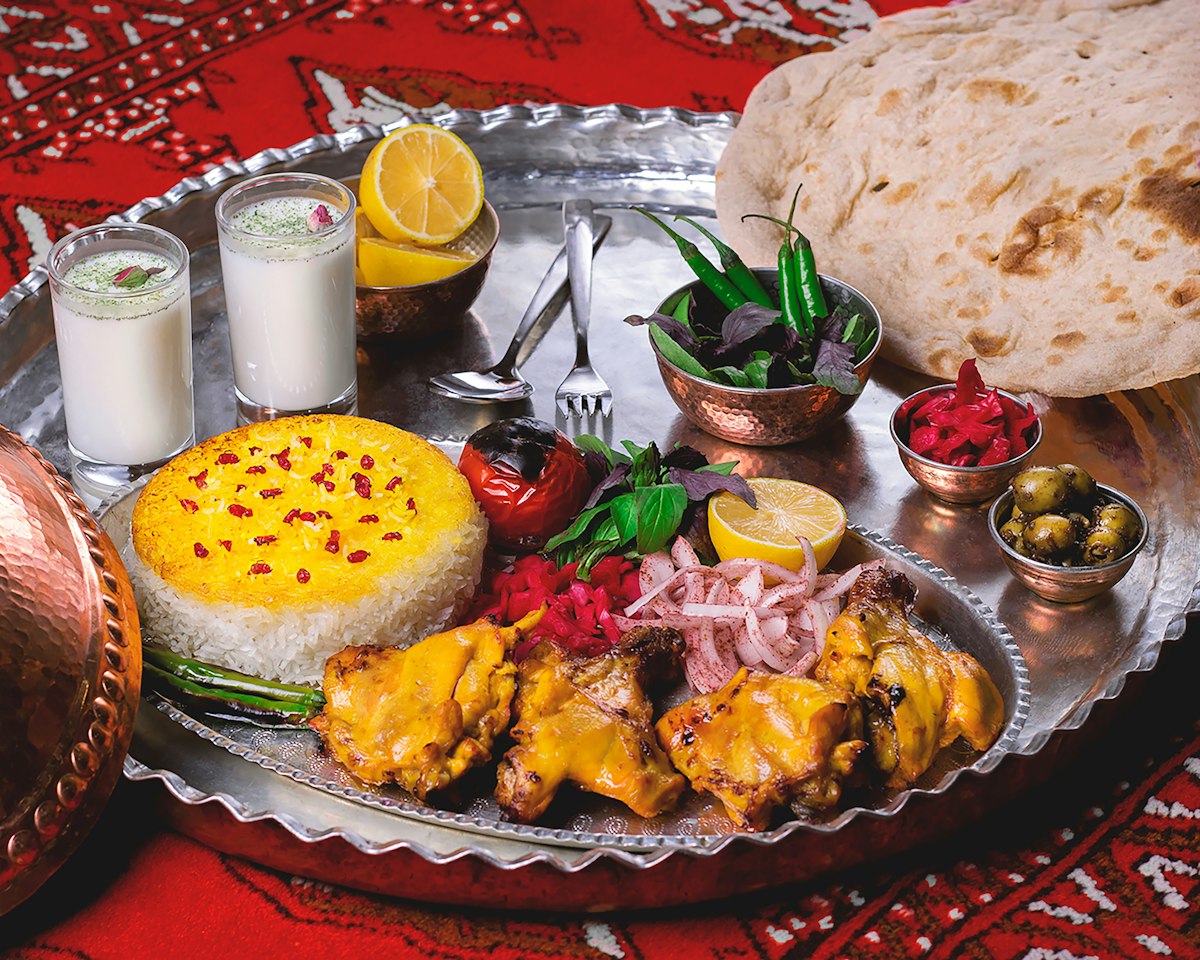
If North India’s other famous dishes reflect the abundance of Punjab and the refinement of Mughal courts, dal baati churma tells a completely different story. This is the food of Rajasthan’s desert warriors and farmers — designed to survive extreme heat, travel long distances, and provide maximum energy from minimal ingredients. It’s also, unexpectedly, one of the most delicious things you’ll eat in India.
The dish has three components. Baati are hard-baked wheat balls, traditionally cooked in hot sand or over dried cow dung cakes (today usually in an oven). Dal is a mixed lentil curry made from five types of lentils (panchmel dal), seasoned with ghee and spices. Churma is the sweet component — the baked baati crushed and mixed with ghee, sugar, and cardamom. You eat all three together: break the baati, pour ghee over it, crumble it into the dal, and take bites of churma between mouthfuls.
Key Ingredients:
- Wheat flour, semolina, ghee (for baati dough)
- Panchmel dal: chana dal, moong dal, toor dal, urad dal, masoor dal
- Ghee (extremely generous — Rajasthanis don’t skimp)
- Crushed baati, powdered sugar, cardamom (for churma)
- Cumin, mustard seeds, asafoetida, red chillies (for dal tempering)
- Dried mango powder (amchur) for tanginess
Traveler Tip: The best dal baati churma is in Jodhpur, Jaipur, and Udaipur at traditional Rajasthani restaurants (look for Chokhi Dhani or similar heritage dining spots). The baati must be drenched in ghee before eating — don’t skip this step, even if it looks excessive. If the baati isn’t hard and crusty on the outside, it’s not been baked properly. This dish is a complete meal; you won’t need to order anything else.
How to Eat Your Way Through North India
North Indian cuisine follows a rough geography of flavour that helps travelers plan their food journey:
- Delhi: The melting pot — you’ll find every North Indian cuisine here. Butter chicken, kebabs, chole bhature, paranthas in Chandni Chowk, and street chaat everywhere.
- Punjab (Amritsar, Chandigarh): The heaviest, richest food. Dal makhani, makki ki roti with sarson ka saag in winter, lassi, and langar (free community kitchen) at the Golden Temple.
- Lucknow: The most refined food. Galouti kebabs (melt-in-mouth minced meat), biryani, nihari (slow-cooked stew), and the best paan (betel leaf) in India.
- Rajasthan (Jaipur, Jodhpur, Udaipur): Desert food built for survival. Dal baati churma, laal maas (fiery red meat curry), ker sangri (desert beans), and pyaaz kachori (onion-stuffed fried pastry).
One rule applies everywhere: eat where the locals eat. The best North Indian food is almost never at the most expensive restaurant. It’s at the chaotic dhaba with plastic chairs, the street stall with a decades-old reputation, or the family restaurant where three generations have been cooking the same recipes.
The Bottom Line
North India’s food is not subtle. It’s designed to be bold, filling, and memorable — much like the region itself. These 5 dishes represent the best of what the region offers: the global icon (butter chicken), the street legend (chole bhature), the royal delicacy (Lucknowi biryani), the vegetarian masterpiece (dal makhani), and the desert warrior’s feast (dal baati churma).
Try all five, and you’ll understand why North Indian cuisine has conquered the world. But do yourself a favour — try them in North India itself. The difference between the authentic version and the exported one is the difference between hearing a song on your phone and hearing it live.
Exploring other regions of India? Read our guides to the must-try dishes of South India, East India’s hidden food gems, and West India’s street food trail. If you’re a restaurant owner looking to showcase regional cuisine on your digital menu, set up your QR code menu to feature seasonal and regional specialities that travelers actively search for.

Leave a Reply