

After nearly a decade of restaurants demanding access to their own customers’ information, Zomato customer data sharing is finally becoming a reality. Zomato has begun rolling out an opt-in feature that allows customers to share their phone numbers with restaurants they order from. Swiggy is expected to follow soon.
This is a landmark shift for India’s restaurant industry. But before you celebrate, you need to understand exactly what data you will (and won’t) receive, how the opt-in mechanism works, and why this move — while welcome — still leaves restaurants far short of the customer intelligence they need to thrive.
In this article, we break down the Zomato restaurant data sharing announcement, compare it with what you get from Swiggy and your own ordering system, and show you how to build a 100% owned customer database starting today.
The Big Announcement: Zomato Will Share Customer Phone Numbers
In late 2025, Zomato’s CEO-Food Delivery Aditya Mangla confirmed that the company is developing a feature to share customers’ phone numbers with restaurant partners — but only after the customer explicitly opts in. The feature has already entered a pilot phase, with in-app consent prompts appearing for users across India.
This announcement came on the heels of two major developments:
- Rapido’s Ownly food delivery platform signed a data-sharing agreement with the National Restaurant Association of India (NRAI) as part of its zero-commission model, launched citywide in Bengaluru in March 2026.
- The NRAI’s long-standing CCI complaint against Zomato and Swiggy, which specifically cited data masking — the practice of hiding customer phone numbers and details from restaurant partners — as an anti-competitive practice.
With competitive pressure from Rapido’s Ownly and regulatory scrutiny from the CCI, Zomato appears to have finally agreed to loosen its grip on restaurant customer data.
What Data Will Zomato Actually Share With Restaurants?
What You WILL Get
- Customer phone number — only if the customer explicitly opts in via an in-app prompt.
That’s it. Just the phone number. And only from customers who consent.
What You WON’T Get
- Customer name or email address
- Complete order history
- Order frequency and spending patterns
- Food preferences and dietary choices
- Delivery addresses
- Feedback and ratings data
- Average order value or basket composition
Comparison: Customer Data from Zomato vs Swiggy vs Your Own Ordering System
| Customer Data Point | Zomato (with opt-in) | Swiggy (expected) | Own Ordering (MenuManager) |
|---|---|---|---|
| Phone Number | Only if customer opts in | Expected similar model | Every order, automatically |
| Customer Name | No | No | Yes, every order |
| Email Address | No | No | Yes, if collected |
| Delivery Address | No | No | Yes, every delivery order |
| Complete Order History | No | No | Yes, full history per customer |
| Order Frequency | No | No | Yes, with analytics |
| Average Order Value | No | No | Yes, tracked automatically |
| Food Preferences | No | No | Yes, derived from order data |
| Feedback & Ratings | Limited (platform-owned) | Limited (platform-owned) | Yes, direct and unfiltered |
| WhatsApp Marketing | Manual (if number obtained) | Manual (if number obtained) | Integrated, automated |
| Loyalty Programs | Platform-controlled | Platform-controlled | Fully customisable by you |
| Data Ownership | Platform owns, shares partial | Platform owns, shares partial | 100% restaurant-owned |
The difference is stark. Even with Zomato’s new data sharing feature, you get one data point (phone number) from a fraction of your customers (those who opt in). With your own ordering system, you get complete customer profiles from 100% of orders from day one.
Why Your Own Ordering System Gives You 100% Customer Data From Day 1
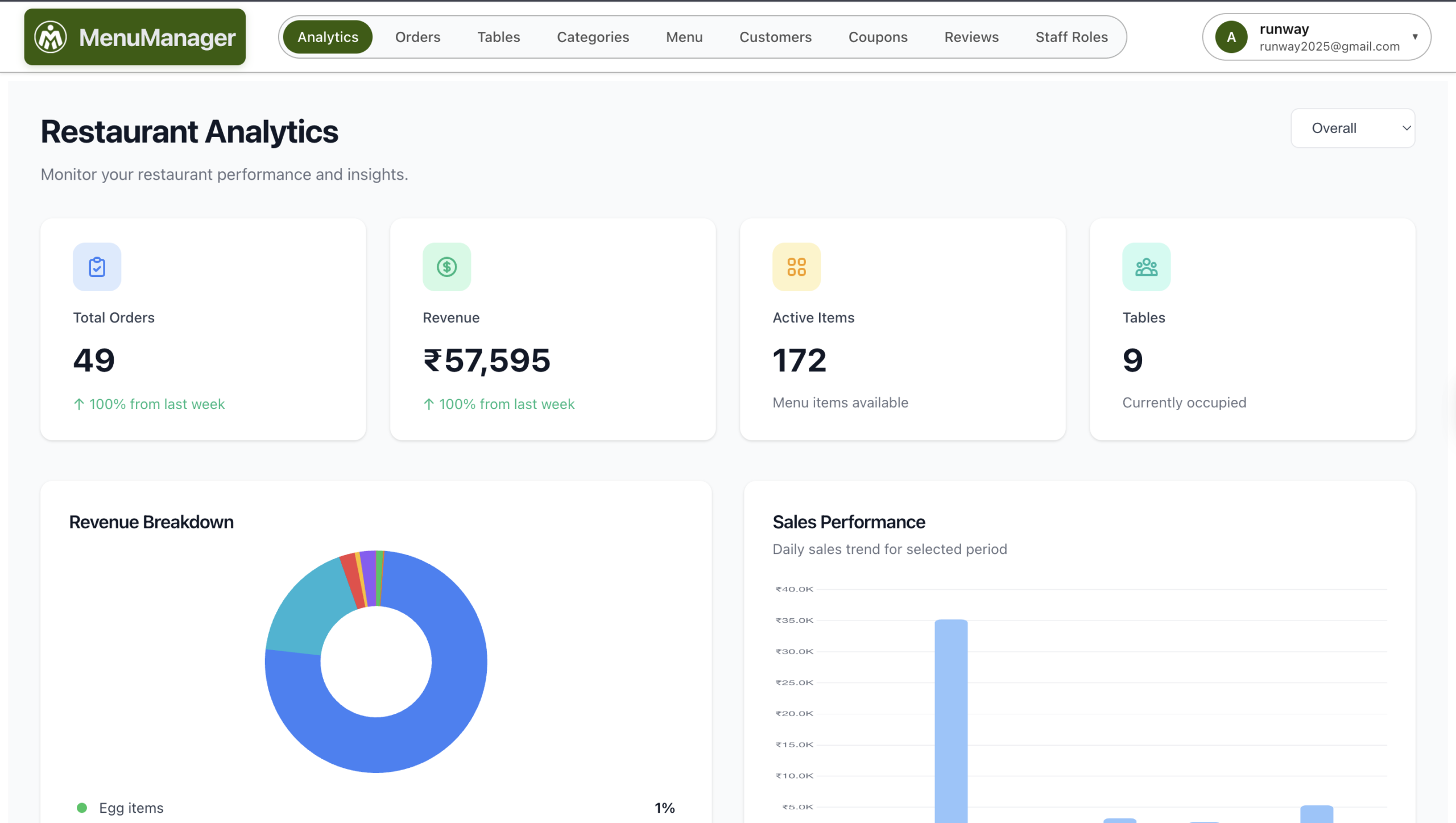
This is exactly what MenuManager is built for. When a customer scans your QR code and places an order through your MenuManager-powered menu, here’s what you get — automatically, with every single order:
- Full contact details — name, phone number, and email captured at the point of order.
- Complete order history — every item ordered, every visit, every rupee spent.
- Customer preferences — veg/non-veg, favourite dishes, ordering patterns.
- WhatsApp marketing capability — send targeted promotions via WhatsApp.
- 100% data ownership — no platform intermediary, no opt-in dependency.
With a QR-based ordering system, every dine-in customer who scans and orders becomes a known customer in your database. For a deeper comparison, read our detailed guide: Zomato vs Own Ordering System.
How to Build Your Own Customer Database Today
Step 1: Set Up Your Own Digital Ordering Channel
Deploy a QR-based ordering system for dine-in, takeaway, and delivery. MenuManager lets you set this up in under 30 minutes.
Step 2: Convert Aggregator Customers to Direct Customers
Include a small card in every Zomato and Swiggy delivery order: “Order directly from us next time and get 15% off! Scan this QR code.”
Step 3: Use WhatsApp for Re-Engagement
Send targeted promotions, festive offers, and lapsed customer win-back campaigns via WhatsApp — the channel with the highest open rates in India.
Step 4: Segment Your Customers
Segment into high-value regulars, occasional orderers, new customers, and lapsed customers for targeted campaigns.
Step 5: Track, Analyse, and Optimise
Use your ordering data to make smarter decisions about your menu, pricing, and promotions. Check out MenuManager pricing to get started.
Frequently Asked Questions
1. When will Zomato start sharing customer data with all restaurants?
Zomato has been piloting its opt-in consent feature since November 2025 and is gradually expanding it across India in 2026. No specific date for full nationwide rollout has been announced.
2. Will Swiggy also share customer data with restaurants?
The NRAI has confirmed similar discussions have started with Swiggy, though at an earlier stage. Industry experts believe Swiggy will follow Zomato’s opt-in model.
3. What percentage of customers are likely to opt in?
Early estimates suggest opt-in rates of 15-35%, meaning most restaurants will only get phone numbers for a small fraction of Zomato orders.
4. Can I use Zomato phone numbers for WhatsApp marketing?
Technically yes if the customer opted in, but you must comply with India’s DPDP Act and TRAI regulations. With your own ordering system, you have much clearer consent.
5. How is owning my ordering system better than waiting for Zomato’s data sharing?
Your own ordering system like MenuManager gives you complete customer profiles from 100% of orders, with full ownership. You also save 25-35% in commissions. Read our full comparison at Zomato vs Own Ordering System.
The Bottom Line
Zomato’s move to share customer phone numbers is progress. But getting opt-in phone numbers from a fraction of your aggregator customers is not the same as owning your customer relationships. The smartest approach: use Zomato and Swiggy for discovery, while building your direct ordering channel to convert those customers into repeat, high-margin, data-rich relationships.
Ready to start owning your customer data? Try MenuManager — set up your digital menu, start collecting customer data, and take control. View pricing and get started today.

Leave a Reply